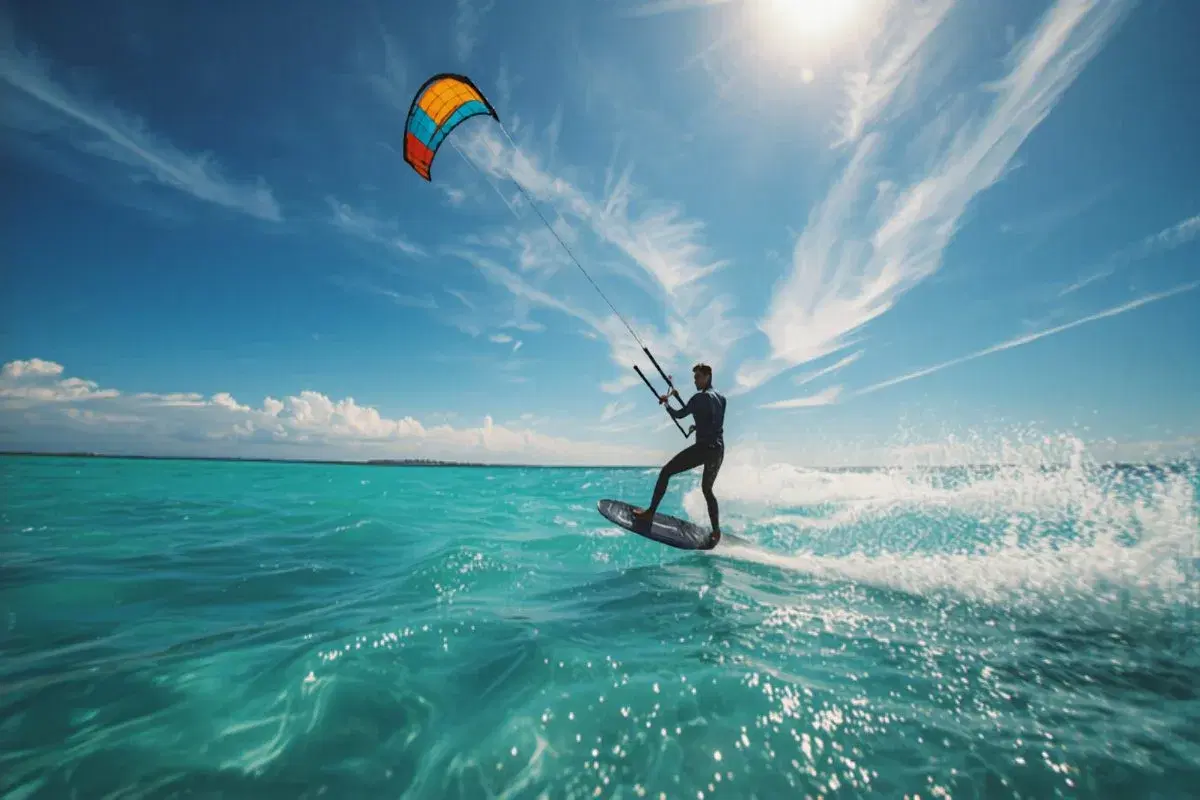
The Outer Banks has a reputation in the global kiteboarding community that's hard to overstate. Cape Hatteras, particularly the area around Canadian Hole (now formally known as Kite Point), is considered one of the best kiteboarding venues in the world — consistent side-shore wind, warm shallow water, and a kiteboarding culture that's been building for over 30 years.
But you don't have to be experienced to enjoy kiteboarding on the OBX. The area around Currituck Sound, just north of Cape Hatteras, is also excellent for beginners — shallower, warmer in the summer months, and with instruction available from certified schools.
Why the OBX for Kiteboarding?
The wind is reliable. The OBX sits at the convergence of North Atlantic weather patterns and the Gulf Stream, producing the consistent 15–25 knot winds that kiteboarding requires. The spring and fall are particularly reliable; summer sees more variable conditions.
The water is forgiving. Currituck Sound and Pamlico Sound are shallow — often 3–5 feet — which makes learning to kitesurf much safer than in deeper water or surf. Falling doesn't mean tumbling in overhead surf; it means sitting in knee-deep water.
The infrastructure is here. Kitty Hawk Kites, Real Watersports, and multiple other schools have been teaching kiteboarding on the OBX for decades. Equipment rental, instruction, and community are built in.
What to Expect as a Beginner
Learning to kitesurf has three distinct phases:
Phase 1: Kite Control on the Beach (Day 1)
The first day or half-day is spent on the beach learning to fly a trainer kite — a small, de-powered version of a full kite. You'll learn the wind window, power zones, body drag, and how to control the kite without getting pulled off your feet. This is more mental than physical and most people have it dialed within 2–3 hours.
Phase 2: Body Dragging in Water (Day 1–2)
Before you ever get on a board, you'll spend time being dragged through the water by the kite. This builds confidence, teaches you how to relaunch a downed kite from the water, and is actually fun in its own right. Water temperatures in summer make this comfortable without a wetsuit.
Phase 3: Board and Riding (Day 2–4)
The first attempts to stand up on the board while controlling the kite are humbling for most people. Expect to fall many times. Most beginners get their first brief rides on days 2–3 of instruction, and the feeling when it clicks is one of the most exhilarating in any sport.
A full learn-to-kitesurf program typically covers 9–12 hours of instruction over 3 days.
Best Kiteboarding Locations Near Grandy Cove
Canadian Hole / Kite Point (Cape Hatteras)
The world-famous spot. Side-shore wind, consistent waves, and a large community of advanced riders. Not ideal for beginners — better suited to riders with independent water-launch skills.
Distance from Grandy Cove: ~1.5 hours south
Currituck Sound (Northern OBX)
The shallow, warm waters of the northern Sound are excellent for beginners and intermediate riders. Less crowded than Cape Hatteras, with flatter water. Several kiteboarding schools operate lessons from Currituck Sound.
Distance from Grandy Cove: 5–20 minutes
Nags Head Sound Side
The sound-side of Nags Head and Kill Devil Hills is a popular learning area with flat water and consistent afternoon sea breezes. Several schools operate here with dedicated launch zones.
Distance from Grandy Cove: ~30 minutes south
Kiteboarding Schools Near Grandy Cove
- Kitty Hawk Kites — The OBX's most established kiteboarding school; locations in Nags Head and Corolla. IKO-certified instructors, gear rental included in lessons.
- Real Watersports — Based in Cape Hatteras/Avon; a top-rated school for more advanced students wanting to learn at Canadian Hole.
- OBX Kite and Wake — Northern OBX instructor available for private and semi-private lessons on the Sound near Grandy.
Lessons typically run $200–$350 for a half-day session (3 hours). Multi-day packages are significantly more economical if you're committing to the full learn-to-ride process.
What to Bring / Wear
- Wetsuit or swimsuit — Summer lessons are comfortable in board shorts; spring and fall may require a 2mm shorty wetsuit
- Water shoes — The Sound bottom is sandy but the shoreline can have shells
- Sunscreen — You're in the water for hours; waterproof SPF 50+ is essential
- Sunglasses with retention strap — UV protection and they won't fly off when you fall
- Water — Stay hydrated; kiting is more physical than it looks
Schools provide all kite equipment. Boards and harnesses are typically included in lesson packages.
After Your Lessons
After a 3-day beginner course, most students are ready to rent gear and practice independently. Kitty Hawk Kites offers equipment rental for students who have completed their course, and the Sound near Grandy Cove provides an excellent practice area.
Grandy Cove is well-positioned for a kiteboarding-focused trip to the northern OBX. The private boat launch and dock give you another water sports option on rest days, and the property is 20–30 minutes from the best beginner kiteboarding areas on the Sound.
Check availability for your OBX kiteboarding trip — book direct and save on platform fees.