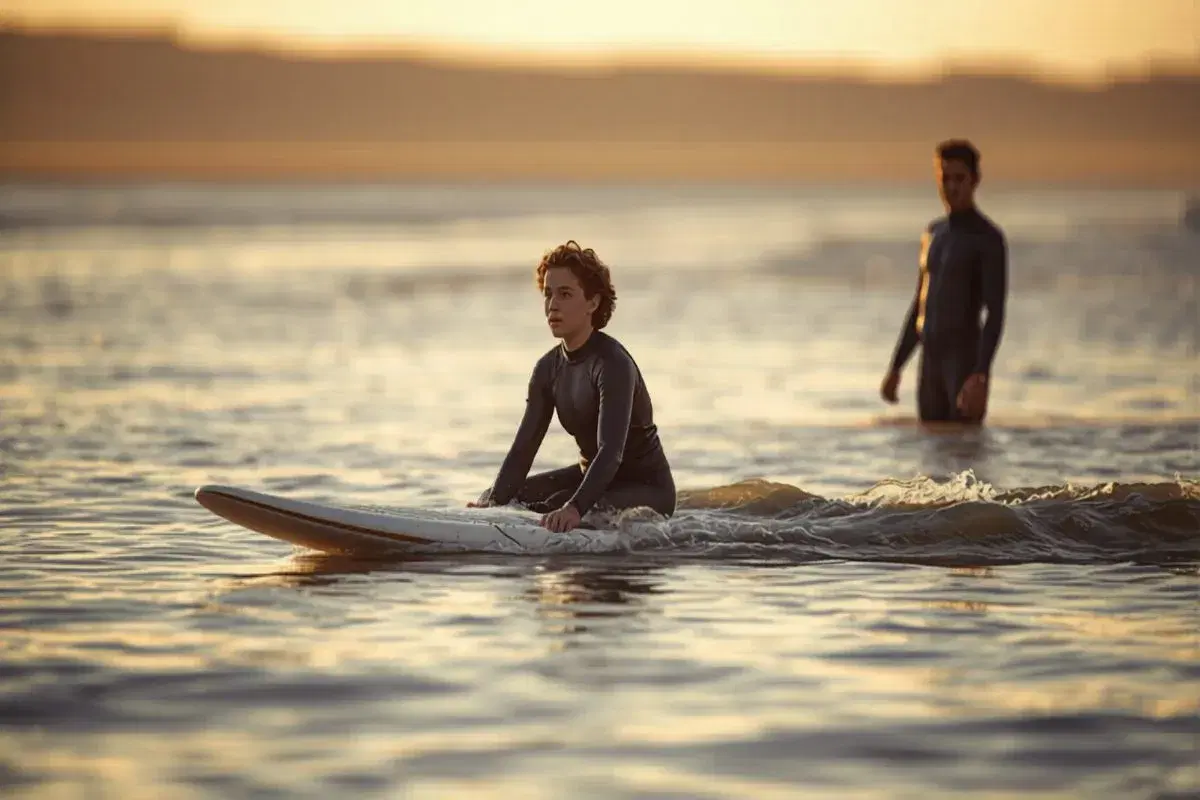
The Outer Banks has been a surf destination since the 1960s and is widely regarded as the most consistent stretch of beach-break surf on the East Coast north of Florida. What makes it especially good for first-time surfers is the bottom: long, gently sloping sandbars instead of reef or rock, with waist- to chest-high waves on most summer mornings. You can fall on your board, fall off your board, and fall into the water without hitting anything harder than sand.
If you've been thinking about trying surfing on your OBX trip, this guide covers the practical decisions: where to take a lesson, how to choose an instructor, what to wear in each season, and what a typical first lesson actually looks like.
Why the Outer Banks Is a Great Place to Learn
A few things separate the OBX from other learn-to-surf destinations:
- Beach-break bottom. Sandbar waves are forgiving. There's no coral or rocks to worry about — just sand.
- Consistent surf. The OBX sees waves nearly every day of the year. Summer mornings deliver gentle, glassy, beginner-friendly conditions before the afternoon onshore wind picks up.
- Wide, uncrowded beaches. Outside the main lifeguard stands in peak July and August, you can almost always find an empty stretch of sand to practice on.
- Warm water in summer. From late June through September, water temperatures regularly hit 72–78°F — warm enough for a rash guard or thin springsuit, no wetsuit required.
- Plenty of certified schools. There are over a dozen reputable surf schools between Corolla and Hatteras, most run by ISA- or NSSIA-certified instructors who've been teaching for a decade or more.
If you've ever tried (or wanted to try) surfing in cold, rocky Pacific water and bailed, the OBX experience is genuinely different.
When Is the Best Time of Year to Learn?
Surfing is a year-round activity on the OBX, but late May through early October is the realistic window for beginners.
- May–June. Water is warming up (65–72°F), waves are usually small and clean, and the beaches haven't filled up yet. Many locals consider this the best month for lessons. You'll want a spring suit.
- July–August. Warmest water of the year (76–80°F). Surf is often small in the mornings — perfect for beginners — then choppy by afternoon. Book a morning lesson.
- September–early October. A favorite for intermediate learners. Hurricane season pushes some swell up the coast, and the post-Labor Day crowds disappear. Water is still 70–75°F.
- Winter. Water drops into the 40s and 50s. Reputable schools don't run beginner lessons in winter — and you shouldn't try to teach yourself.
If you're picking dates around a surf lesson specifically, early June or mid-September are the sweet spots. Check availability for those months before they fill up.
Where to Take a Lesson (By Area)
Surf schools operate from Corolla all the way south to Hatteras. Here's where the bulk of beginner instruction happens:
Kill Devil Hills & Nags Head — The Surf School Hub
Most of the OBX's longest-established surf schools are based here. The beaches in front of MP 8–14 have wide, sandy lineups with a couple of good beginner sandbars that re-form every season. This is also where most schools host their morning group lessons.
Best for: First-time surfers, group lessons, day-of walk-up availability
Buxton (Hatteras Island)
Buxton is the OBX's most famous surf town, home to the legendary "Lighthouse" break. It's not really a beginner spot — but if you have a half-day to drive down and want a more intimate surf-town vibe, several Hatteras-based schools offer private beginner lessons north of the lighthouse, where the sandbars are gentler.
Best for: Intermediate learners, second-lesson students, people who want the full surf-culture experience
Corolla and Duck
The northern beaches see softer, slower surf than Kill Devil Hills, which can be ideal for very young kids (8 and under) and for adults nervous about getting tumbled. A handful of mobile surf schools will come to you with boards and run a private lesson right out front of a rental.
Best for: Families with young kids, private lessons, students who want a quieter beach
What to Look for in a Surf School
Not all surf schools are created equal. A few green flags to check before booking:
- Certified instructors. Look for ISA (International Surfing Association) or NSSIA (National Surf Schools and Instructors Association) certification. Both require water-safety and CPR credentials.
- Low student-to-instructor ratio. For beginners, no more than 4 students per instructor is the standard. 2:1 or 1:1 is better.
- Soft-top boards. First lessons should always be on a soft-top longboard (8'–9'). If a school is putting beginners on hard boards, look elsewhere.
- Beach safety briefing. A good lesson starts with 15–20 minutes on the sand covering ocean safety, rip currents, and board handling before anyone gets in the water.
- Insurance and liability paperwork. Every legitimate school will have you sign a waiver. If they don't, that's a red flag.
Most reputable OBX schools price group lessons (90 minutes) noticeably lower than private one-on-one lessons. Either tier typically includes the board, a rash guard or wetsuit (seasonal), and beach access. Always confirm pricing and what's included when you book — rates and inclusions vary year to year.
What a First Lesson Actually Looks Like
Here's the rough structure of a beginner lesson on the Outer Banks so you know what to expect:
- Meet on the beach. Usually 7:30 or 8:00 AM to catch the calm morning surf.
- Sand briefing (15–20 min). Ocean safety, identifying rip currents, how to fall safely, how to hold the board, and the basic "pop-up" motion practiced on the sand.
- Paddle-out drills (10 min). Instructor walks you out to chest-deep water, helps you onto the board, and starts pushing you into small waves.
- First waves (60+ min). You'll catch waves on your belly first, then work up to your knees, then eventually to your feet. Most students stand up at least once in their first lesson.
- Debrief and stretch (10 min). Cool-down on the beach with feedback and tips for the next session.
Don't expect to walk away surfing. Expect to walk away with the foundational mechanics, a good idea of whether you want to keep going, and probably a few bruises on your ribs from the board.
What to Bring (and What Not to Worry About)
The surf school will provide the board and usually a rash guard or wetsuit. You bring:
- Swimsuit you don't mind getting sandy. Tight-fitting is best — no boardshorts that ride up.
- Sunscreen. Reef-safe, water-resistant SPF 50+. Apply 30 minutes before. The OBX sun is intense, especially on the water.
- Towel and dry clothes. For after the lesson.
- A water bottle. You'll be thirstier than you expect.
- A small dry bag. Useful if you're walking from a parking lot.
What you don't need: your own board, a wetsuit (unless it's May or October), or any prior fitness. If you can swim 50 yards comfortably, you can take a lesson.
After Your First Lesson
If you catch the surf bug — and most people do — here's how to keep going on your OBX trip:
- Rent a board. Most surf shops in Kill Devil Hills, Nags Head, and Buxton rent soft-tops by the day or week. Going out on your own the next morning is the single best thing you can do to lock in what you learned.
- Book a second lesson. A second 90-minute session, ideally 2–3 days after the first, makes a huge difference in confidence and progression.
- Read the surf forecast. Magic Seaweed and Surfline both have detailed OBX forecasts. Look for 2–3 ft at 8–10 seconds with light west or southwest wind — that's beginner-perfect.
- Always surf with a buddy. Even at small surf, the OBX has strong rip currents. Never paddle out alone, and always swim near a lifeguard stand in summer.
Combining Surf Lessons With a Grandy Cove Stay
Grandy Cove is about 20–25 minutes from the closest beginner surf beaches in Kitty Hawk and Kill Devil Hills, and 35–45 minutes from the Nags Head schools. That's a comfortable morning drive — you can leave at 7:00 AM, hit a 7:30 lesson, and be back on the sound by 10:30 for breakfast on the dock.
What makes Grandy Cove particularly good as a surf-trip base:
- Outdoor shower for rinsing off salt and sand before you come inside.
- Quiet evenings on the water to recover from sore shoulders.
- Plenty of room to lay out a wetsuit to dry on the deck overnight.
- Kayaks and paddleboards on Currituck Sound for cross-training on flat water between ocean sessions.
- Pet-friendly with no size restrictions — so the dog comes along too.
If you're planning an OBX surf trip, see our list of all the activities you can pair with a stay, or browse the 3-day OBX itinerary for a sample week that includes a surf lesson, a kayaking session on Currituck Sound, and a day on the wild horse beaches at Corolla.
A Final Note on Ocean Safety
The Atlantic at the Outer Banks is beautiful, warm in summer, and genuinely dangerous if you don't respect it. Rip currents are the #1 cause of beach incidents on the OBX every year. A few non-negotiables for beginners:
- Always surf or swim near a lifeguard stand when one is staffed.
- If you get caught in a rip, don't fight it. Swim parallel to shore until you're out of the current, then swim in.
- Check the NWS rip current forecast before you head out: low/moderate/high risk is published daily.
- Don't paddle out in conditions you didn't pay for. If your lesson is canceled because of high surf, that's the right call.
A certified instructor will cover all of this on the sand before your first wave — listen carefully and ask questions.
Ready to plan an OBX surf trip? Check availability at Grandy Cove for the May–early October window, or book direct to lock in a quiet waterfront base for your trip.