The Outer Banks has more historic lighthouses per mile of coastline than almost anywhere in the United States. Four distinct towers — built between 1823 and 1875 — stand guard along the barrier islands, each one protecting a different stretch of the notoriously dangerous coastline known as the "Graveyard of the Atlantic." For lighthouse visitors, the OBX is a genuine destination.
Here's a guide to all four, including climbing access, location, and tips for visiting.
1. Currituck Beach Lighthouse (Corolla)
Built: 1875
Height: 162 feet
Pattern: Unpainted red brick (the only OBX lighthouse not painted)
Distance from Grandy Cove: ~35 minutes north
The Currituck Beach Lighthouse is the northernmost of the OBX lighthouses and arguably the most photogenic. The unadorned red brick stands in stark contrast to the sky, and the surrounding grounds include the beautifully restored Whalehead Club — a 1920s hunting lodge built by a wealthy industrialist for his wife when she was excluded from the area's men-only hunting clubs.
Climbing: Open seasonally (typically April–November); $12 adults, $6 children under 12; 214 stairs to the top. The views from the top encompass miles of barrier island beach, Currituck Sound, and on a clear day, the Virginia coast to the north.
Grounds: Free to walk year-round. The Whalehead Club museum charges a separate admission for tours.
Tip: Pair this visit with a Corolla wild horse tour for a full day in the northern OBX. See our wild horse tour guide.
2. Bodie Island Lighthouse (Nags Head area)
Built: 1872 (current structure; two predecessors fell)
Height: 170 feet
Pattern: Black-and-white horizontal bands
Distance from Grandy Cove: ~40 minutes south
Bodie Island Lighthouse is operated by the National Park Service and sits at the north entrance to Cape Hatteras National Seashore. The horizontal banding is distinctive and the surrounding freshwater marshes are an exceptional birding area — the NPS maintains walking trails through the marsh that are excellent for shorebirds and wading birds year-round.
Climbing: Open seasonally (typically April–Columbus Day weekend); free with $20 National Seashore pass or $5 per person without. 214 stairs. The visitor center has exhibits on lighthouse history and the Cape Hatteras Seashore.
Grounds: Free year-round. The NPS bird ponds and walking trails near the lighthouse base are among the best birding spots on the OBX.
Tip: The lighthouse access road is off NC-12 south of Nags Head. The drive through the national seashore toward the lighthouse is beautiful — pull off at the Coquina Beach stop to see the historic shipwreck ruins on the beach.
3. Cape Hatteras Lighthouse (Buxton)
Built: 1870
Height: 198 feet
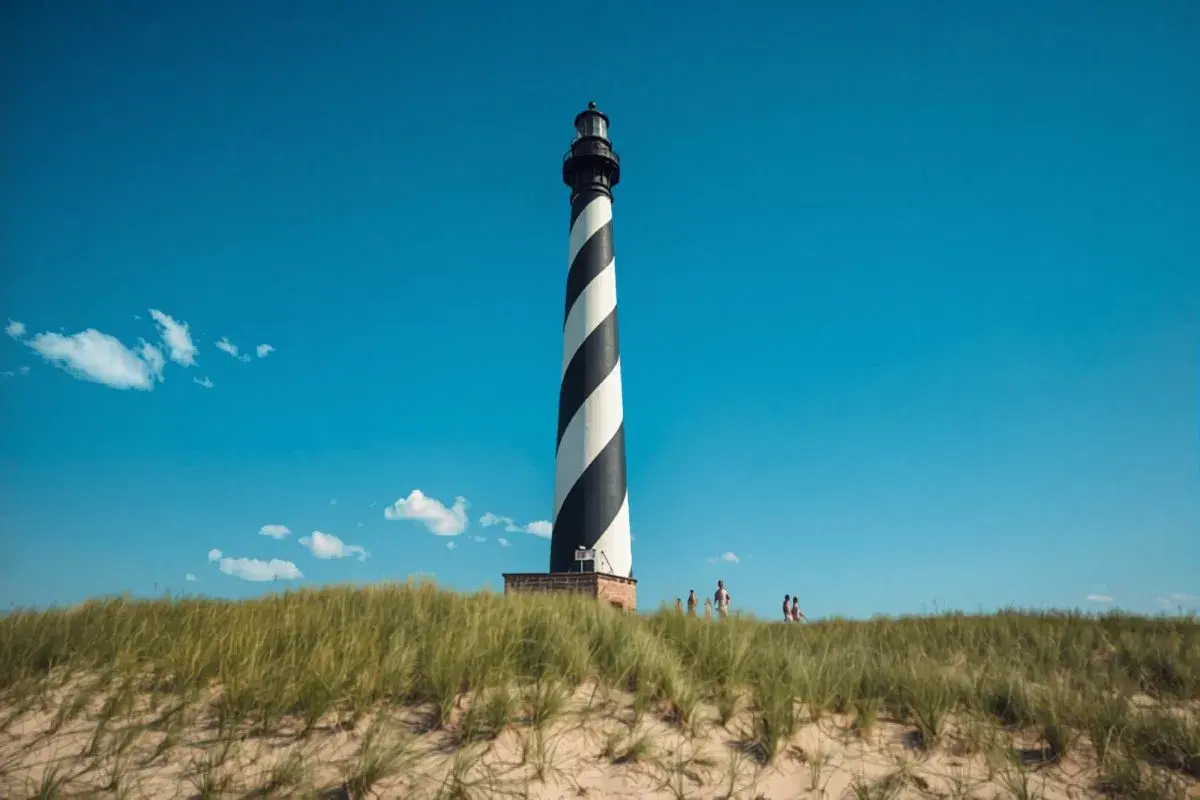
Pattern: Black-and-white spiral (diagonal stripes)
Distance from Grandy Cove: ~90 minutes south
The tallest lighthouse in the United States and the most famous lighthouse on the East Coast. The Cape Hatteras spiral pattern is one of the most recognized images in American coastal history. Located at the point where the cold Labrador Current and warm Gulf Stream collide, Cape Hatteras marks one of the most dangerous stretches of the Atlantic seaboard — over 2,000 documented shipwrecks lie offshore.
In 1999, the lighthouse was moved 2,900 feet inland to protect it from the eroding shoreline — one of the most dramatic engineering projects in preservation history.
Climbing: Open April–October; $10 adults, $5 children under 12. 257 stairs — the longest climb of any OBX lighthouse. Arrive early in summer; queues form quickly.
Tip: The nearby Graveyard of the Atlantic Museum in Hatteras village is worth the extra stop for maritime history enthusiasts.
4. Ocracoke Lighthouse (Ocracoke Island)
Built: 1823
Height: 75 feet
Pattern: White-painted brick
Distance from Grandy Cove: ~3–4 hours (including ferry)
The oldest and shortest of the OBX lighthouses, the Ocracoke Lighthouse is also the most remote. Ocracoke Island is accessible only by ferry — either from Hatteras (free, 1 hour) or from the mainland via Cedar Island or Swan Quarter (toll ferry, 2.5 hours). The lighthouse sits in the heart of Ocracoke village, surrounded by the quirky, time-capsule community that the island has maintained for centuries.
Climbing: Not open for climbing; the grounds are open year-round and free.
Why go: Ocracoke is its own destination. The village has excellent restaurants (Eduardo's Taco Stand is legendary among OBX regulars), the harbor is beautiful, and the pace of life is genuinely unhurried. Blackbeard the pirate was killed in the waters off Ocracoke in 1718.
Tip: Plan a full day or an overnight. The ferry schedule from Hatteras makes a same-day round trip workable but rushed. If you stay, the island has vacation rentals and a handful of inns.
Visiting All Four: A Multi-Day Plan
Based from Grandy Cove, here's a logical way to see all four lighthouses:
Day 1: Currituck Beach Lighthouse + wild horse tour (30–40 min north)
Day 2: Bodie Island Lighthouse + Cape Hatteras Lighthouse (40–90 min south; plan a full day)
Day 3: Ocracoke Lighthouse day trip via Hatteras ferry (full day)
Check availability and book your OBX lighthouse tour trip — Grandy Cove is the closest waterfront rental to Currituck Beach Lighthouse and a comfortable base for all four.