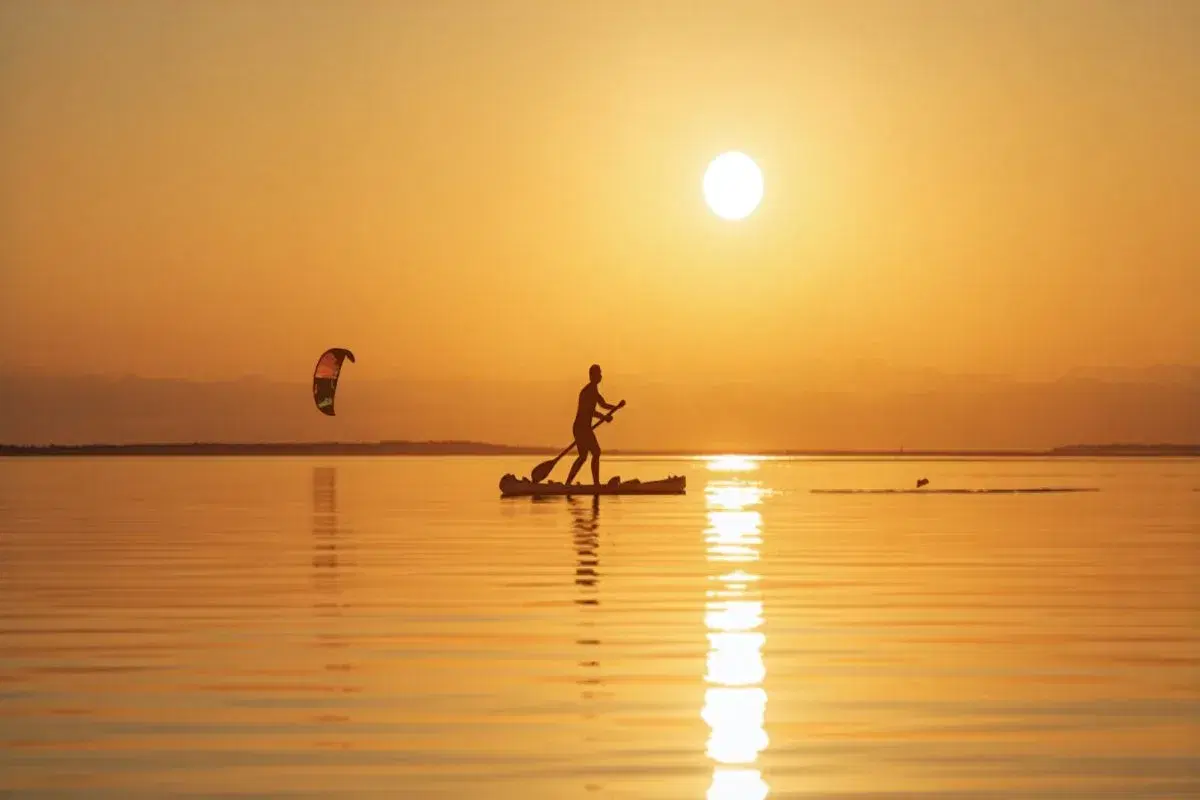
The Outer Banks is one of the rare destinations where you can paddleboard on glass-flat water in the morning, jet-ski in protected sound waters at lunch, and parasail over the open Atlantic by late afternoon. The combination of Currituck Sound on the west and the ocean on the east creates two completely different water sports environments — and both are within a short drive of any north-OBX base.
This is an honest guide to the water sports worth doing on the Outer Banks, with realistic expectations about skill level, cost, and where to actually go. For deeper dives on kayaking and kiteboarding, we have separate guides linked throughout.
Why the Outer Banks Is Built for Water Sports
The geography does most of the work. The barrier islands sit between the Atlantic Ocean (open water, wave-driven sports, beach activities) and Currituck Sound (shallow, sheltered, freshwater-brackish, generally flat). For most water sports beginners, the sound is the easier classroom — less swell, no shore break, and steady wind without the ocean's punishing currents.
Currituck Sound averages just 4–6 feet deep across vast areas, which means you can usually stand if you fall off your board. That single fact is why so many first-timers learn to paddleboard, kiteboard, and windsurf here rather than on the ocean side.
Stand-Up Paddleboarding (SUP)
SUP is the gateway water sport on the OBX — the one almost anyone can pick up in a single morning. Currituck Sound is one of the best learning environments on the East Coast.
Skill level: Beginner-friendly. Most adults stand and paddle within 15 minutes on calm water.
Best location: Currituck Sound on a low-wind morning. The water is typically glass-flat between sunrise and 10 AM before the afternoon breeze fills in.
What you'll need:
- A board (10'6" to 11'6" all-around shapes are easiest for beginners)
- A paddle sized to your height (handle reaches your raised wrist)
- A leash — non-negotiable even on shallow water
- A PFD (legally required when off the beach)
Rentals: Most northern OBX outfitters rent inflatable and hard SUPs by the half-day or full day. Inflatables are easier to transport but slower; hard boards glide better but need roof racks.
At Grandy Cove: Guests routinely launch directly off the private dock at sunrise. The cove itself is protected from sound chop by the surrounding shoreline, which makes it ideal for first attempts before venturing into the open sound.
Tips that matter:
- Paddle into the wind first. Coming back tired with a tailwind is much easier than the reverse.
- Keep your gaze on the horizon, not your feet. Vision drives balance.
- Bend knees slightly — a locked-knee stance gets dunked by every small ripple.
Windsurfing
Windsurfing went through a popularity dip in the 2010s but it's having a quiet renaissance — particularly because Currituck Sound is genuinely one of the best windsurfing classrooms in North America. Steady thermal winds, shallow water you can stand in, and almost no boat traffic away from the main channels.
Skill level: Steep first day, manageable second. Most learners can sail downwind and back by the end of a two-day lesson.
Best season: April–June and September–October for the most reliable steady winds. July and August are sailable but often lighter and gustier.
Wind direction: South and southwest winds are most common in summer. North winds in fall and winter. Both work on Currituck Sound, but launches are wind-direction-specific — ask the rental shop.
Where to learn: The northern OBX has fewer dedicated windsurfing schools than it once did, but kiteboarding shops in Duck and Avon often still offer windsurfing lessons or rentals. The shallow flats off the western shore of the sound — accessible from Grandy and Currituck — are the classic teaching grounds.
The honest truth: Windsurfing has a steeper learning curve than SUP, paddleboard, or kayak. You will fall a lot on day one. Day two is significantly better. By day three most people are actually sailing.
Kiteboarding
The Outer Banks is one of the world's premier kiteboarding destinations — full stop. The combination of consistent wind, shallow standable water, and accessible launches makes Currituck Sound a global pilgrimage site for both beginners and pros.
We have a full beginner's breakdown here: Kiteboarding OBX: A Beginner's Guide. It covers gear, schools, costs, the realistic timeline to independence, and where to take your first lesson.
The short version: plan on 6–9 hours of lessons before you'll ride independently. It's not a one-day sport. But if you're already an OBX regular, it's worth the investment.
Parasailing
Parasailing is the Outer Banks water sport for people who want a memorable hour on the water without learning a skill. You strap into a harness, the boat accelerates, the parachute fills, and suddenly you're 400–800 feet above the Atlantic looking down at the barrier islands.
Skill level: Zero. If you can sit in a harness, you can parasail.
Best operators: Most parasail operators run out of Nags Head, Manteo, and Hatteras. Trips are typically 60–90 minutes total, with the actual flight time around 10–15 minutes.
What to expect:
- Single, tandem, and triple flights are all common
- Most operators offer "dipping" — they lower the line at the end to splash your toes in the ocean
- It's much calmer than it looks. The ride is smooth and quiet once you're up
Pricing: Generally falls in the $90–$120 per person range. Worth doing once. Most people don't do it twice in the same trip.
Jet Skiing (Personal Watercraft)
Jet skiing on the OBX splits into two worlds: rental rides (guided or limited-range hourly rentals on the sound) and personal ownership (bring your own and launch wherever you want).
Where to rent: Several operators run out of the sound side in Kitty Hawk, Kill Devil Hills, and Nags Head. Rentals typically come with a designated riding area marked by buoys.
Where to ride your own: Currituck Sound is one of the East Coast's great jet-ski playgrounds. Miles of open water, low boat traffic outside the marked channels, and direct launches from many private docks — including Grandy Cove's.
Rules to know:
- North Carolina requires a Boater Education Certificate for anyone born after January 1, 1988 operating a personal watercraft.
- Life jackets are required at all times.
- No-wake zones near marinas and the Wright Memorial Bridge causeway are heavily enforced.
Sailing
Currituck Sound's shallow, broad expanse makes it good — but not great — for sailing. The shallow depth limits keel boat access in many areas. Centerboard dinghies (Sunfish, Lasers, small catamarans) are the better fit for the sound. Larger sailboats are common in Kitty Hawk Bay and around Manteo where the water is deeper.
For sailing lessons or charters, Manteo is the OBX sailing hub. The Outer Banks Sailing Charters and similar operators run sunset cruises and half-day instructional charters out of Pirate's Cove.
Wakeboarding, Waterskiing, and Tubing
If you (or a friend) has a boat, Currituck Sound is excellent for tow sports. The flat morning water is ideal for slalom skiing and wakeboarding; the broad open expanses leave room for long pulls without tight turns.
Most rental boats on the sound come with a tow attachment. Tubes are usually included with rental rates. Wakeboards and skis are usually rented separately.
Where to launch: Boat launches dot the sound side. Grandy Cove guests use the private launch on property for direct sound access without a public ramp queue.
Surfing the Atlantic Side
Surfing isn't covered in detail here because the OBX surf scene is large enough to deserve its own treatment — and we'll have a dedicated guide soon. The short version:
- Best beaches for beginners: Kitty Hawk and Nags Head have gentler, less heavily-shaped beach breaks
- Best for experienced surfers: Kill Devil Hills, S-Turns in Rodanthe, and the Cape Hatteras lighthouse beach
- Best season: September and October for consistent swell from late-season tropical systems
- Lesson costs: Group surf lessons typically run $75–$95 per person for 90 minutes
Kayaking and Crabbing
Two of the most underrated water activities on the OBX aren't really "sports" at all. Sunset kayak tours on Currituck Sound and drop-line crabbing from a dock are both deeply rewarding ways to spend a few hours on the water with kids or non-athletes.
For a full breakdown of kayaking routes, gear, and where to launch, see our Kayaking Currituck Sound guide.
Which Water Sport Should You Try?
| If you want... | Try... |
|---|---|
| To get on the water within 15 minutes of arriving | SUP |
| A memorable photo op, no skill required | Parasailing |
| To learn a real lifelong sport | Windsurfing or kiteboarding |
| Speed and adrenaline | Jet ski |
| To bring the whole family — kids included | Tubing or kayak |
| A quiet morning on glassy water | SUP at sunrise |
| World-class wind conditions | Kiteboarding |
What Grandy Cove Adds to the Equation
The honest reason Grandy Cove works so well as a water sports base isn't a marketing line — it's the geography. The property is directly on Currituck Sound with a private dock and boat launch, which means you can:
- Step from the porch onto a paddleboard before coffee
- Launch your own jet ski or kayak without booking a ramp slot
- Watch the morning glass and call your own start time
- Take pets out on the dock between sessions (no breed or size restrictions)
You also get the practical advantage of being closer to the open sound than most central-OBX rentals. Northern Currituck Sound has wider, cleaner wind lines and far less boat traffic than the busy stretches around Kitty Hawk and Nags Head.
Planning Your Water Sports Trip
A few practical points for getting the most out of a water-sports-heavy OBX trip:
- Mornings on the sound, afternoons on the ocean. Wind builds through the day. Glass water in the morning is for SUP and kayaking; the afternoon thermals are for wind sports.
- Pack a wetsuit shirt in shoulder seasons. April, May, October, and November water temps in the sound run 55°F–68°F. A 1.5mm or 2mm rash shirt is the difference between fun and a numb afternoon.
- Reef-safe sunscreen. Currituck Sound's brackish ecosystem is sensitive. Mineral-based zinc sunscreens are better both for your skin and for the sound.
- Book lessons in advance. Kiteboarding and windsurfing schools fill up quickly between Memorial Day and Labor Day. Two-week advance booking is realistic.
Ready to Plan Your Trip?
The northern Outer Banks gives you more water sports variety per square mile than just about anywhere on the East Coast — and Currituck Sound is one of the great undiscovered classrooms for almost every wind-driven sport.
Check availability at Grandy Cove and lock in your dates, or book direct to skip the platform fees. Our things to do page covers the dock, launch, and everything available on property.