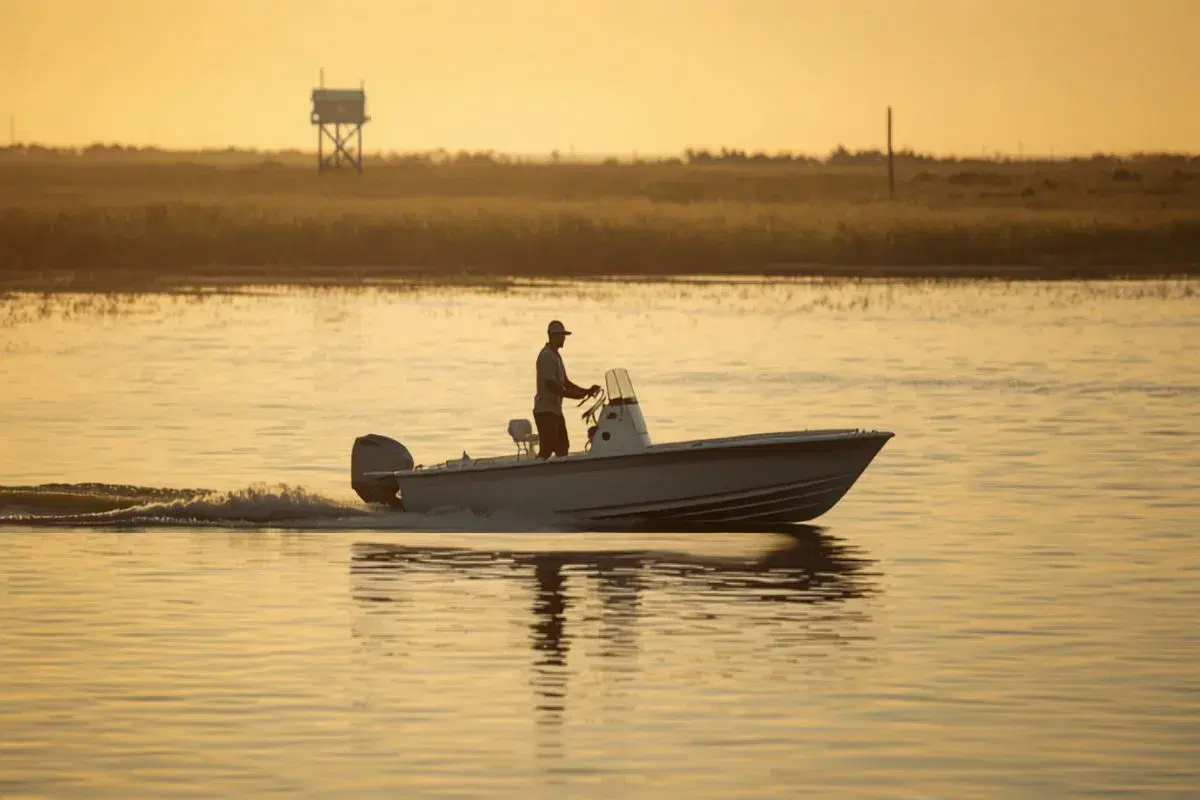
Most Outer Banks visitors only ever see the ocean side of the barrier islands. But on the mainland edge of the OBX sits one of the most underrated boating waters on the East Coast: Currituck Sound. It's a wide, shallow, brackish estuary that stretches roughly 30 miles from the Virginia line down past Kitty Hawk, separated from the Atlantic by the narrow strip of Corolla and the 4WD beaches beyond it.
For boaters, the sound has a rare combination of qualities — it's protected from ocean swell, it's calm on most mornings, the water is forgiving, and the shoreline is dotted with marshes, creeks, and coves that you can explore for years without seeing the same spot twice. If you're trailering a boat to the OBX, or you just want to get out on the water during your stay, this is your guide.
Why Currituck Sound Is a Boater's Water
The sound's defining feature is that it's shallow — much of it runs 3 to 6 feet deep, with broad flats even shallower than that. That shapes everything about boating here.
The upside is that the water stays relatively calm. Without the depth to build large waves, Currituck Sound rarely gets the heavy chop you'd find on a big open bay. On a typical summer morning the surface is glassy, and even on a breezy afternoon the waves stay short and manageable. That makes it forgiving for less experienced boaters and ideal for small craft.
The trade-off is that you have to respect the depth. Run-aground hazards, submerged stumps near the shoreline, and shifting sandbars are real. Currituck is not a place to open the throttle blindly across unfamiliar water — local knowledge and a good chart matter more here than horsepower.
The other thing that makes the sound special is what lives in and around it. This is a freshwater-leaning brackish estuary — one of the few on the Atlantic coast — which means it supports largemouth bass and other freshwater species alongside the usual estuary fish. It's a major stop on the Atlantic Flyway, so the birdlife is constant, and the marshes are some of the best duck hunting grounds on the East Coast.
Launching Your Boat on Currituck Sound
If you're bringing your own boat, the single biggest convenience is staying somewhere with direct water access so you're not hauling a trailer back and forth every day.
Grandy Cove sits directly on the sound with a private dock and boat launch on the property. That means you can launch in the morning, tie up at the dock between outings, and have your boat ready to go the moment you want to be on the water — no public ramp lines, no fees, no loading and unloading at the end of every day. For anyone traveling with a boat, that convenience is the whole game. You can see the dock and on-site amenities here.
If you're using a public ramp instead, Currituck County maintains several access points along the mainland and on Knotts Island, and there are ramps on the Corolla side as well. Public ramps fill up fast on summer weekends, so plan to launch early.
A few launch-day basics for the sound specifically:
- Check the wind before the water. Currituck is wind-driven — a steady north or south wind can actually push water out of the sound and drop the depth noticeably, while the right wind can pile it up. A strong sustained wind matters more than tide here, because the sound has very little lunar tide.
- Trim up in the shallows. Coming off the launch and near shorelines, keep your motor trimmed up and your speed down until you're in clearly deeper water.
- Carry a paper chart or a chartplotter you trust. Cell-based map apps don't show the submerged hazards.
Where to Explore
Currituck Sound rewards slow exploration. Here are the kinds of places worth pointing the bow toward.
The Marsh Coves and Creeks
The western (mainland) shoreline is laced with marsh creeks and quiet coves that branch off the main sound. These are the calmest water you'll find — sheltered from wind on nearly every side — and they're where the wildlife is thickest. Idle in slowly, cut the motor, and you'll often have herons, egrets, ospreys, and turtles for company. These coves are also where the crabbing and shallow-water fishing are best.
Toward Corolla and the 4WD Beaches
Running east across the sound takes you toward the Corolla shoreline and the narrow barrier strip. From the water you get a completely different view of the Currituck Beach Lighthouse and the Whalehead estate, and on a calm day it's a beautiful crossing. Note that the sound gets shallow and weedy near the eastern shore — go slow and watch your depth.
Knotts Island and the Northern Sound
To the north, the sound opens up around Knotts Island, a genuinely remote pocket of Currituck County reachable by a free state ferry or by boat. The northern reaches feel wild and lightly traveled — big skies, big water, and very few other boats midweek.
The Mackay Island National Wildlife Refuge
Up at the north end, the Mackay Island National Wildlife Refuge protects thousands of acres of marsh and impoundment. It's a stronghold for migrating waterfowl and a quiet place to drift and watch birds. Respect posted boundaries and seasonal closures, especially during migration and hunting seasons.
Fishing the Sound from a Boat
A boat opens up water you simply can't reach from a dock or the bank. Currituck Sound's brackish character means you can target largemouth bass in the grass beds and freshwater pockets, plus striped bass (rockfish), speckled trout, white perch, and catfish depending on the season and salinity.
The grass flats and submerged vegetation are the key structure — bass and specks both relate to the edges of the grass. Early morning and the hour before dusk are prime, especially in the warmer months when fish move shallow to feed. For a fuller breakdown of species, seasons, and tactics across the region, see our Outer Banks fishing guide.
A North Carolina fishing license is required for most anglers — the Coastal Recreational Fishing License covers the sound's coastal waters. Check current NC Wildlife Resources Commission rules before you fish, since the line between coastal and inland waters can affect which license you need.
Safety and Etiquette on Currituck Sound
The sound is forgiving, but it still demands respect. A few things that matter here more than on deeper water:
- Watch the wind and the sky. Summer afternoon thunderstorms build fast over the sound and can turn calm water rough in minutes. Get the marine forecast before you launch and keep an eye on the western sky — storms typically roll in from the mainland.
- Mind the depth, always. Stay in marked or known-deep channels at speed. When in doubt, slow down. Running aground on a sandbar at speed is the most common mishap out here.
- Carry the required safety gear. Life jackets for everyone aboard, a sound-signaling device, and required lighting if you'll be out near dawn or dusk. North Carolina requires children under 13 to wear a life jacket while underway on most vessels.
- Respect the marshes and wildlife. Keep your wake down near shorelines, other boats, and anglers. Give nesting birds and refuge boundaries a wide berth.
- File a float plan. Tell someone where you're going and when you'll be back — especially if you're heading to the remote northern reaches where cell coverage is spotty.
Not Bringing a Boat? You Can Still Get on the Water
You don't need a powerboat to enjoy Currituck Sound. The same protected coves that make it great for boating make it excellent for kayaking and paddleboarding — calm, shallow, and beginner-friendly. From the dock at Grandy Cove you can put in a kayak and be among the marsh grass in minutes. See our guide to kayaking Currituck Sound for routes and tips.
The sound is also one of the best places on the OBX to learn kiteboarding and windsurfing, thanks to the steady wind and shallow, forgiving water — there's no shortage of ways to make use of it. Our Outer Banks water sports guide covers the full range.
Plan Your Currituck Sound Boating Trip
The thing that makes Grandy the ideal base for a boating trip isn't just the location — it's that you can be on the sound straight from the property. The private dock and boat launch mean your boat is part of the vacation, not a daily logistics problem. You're staying on the quiet, protected, mainland side of the Outer Banks, with the marsh creeks out your back door and every OBX beach a short drive east.
Grandy Cove is pet-friendly with no size restrictions, so the dog comes too — and there's no better first mate on a calm-morning cruise. Learn more about traveling with your dog here.
Ready to bring the boat? Check availability and book your stay direct — no platform fees, just you, the water, and a dock to call your own.