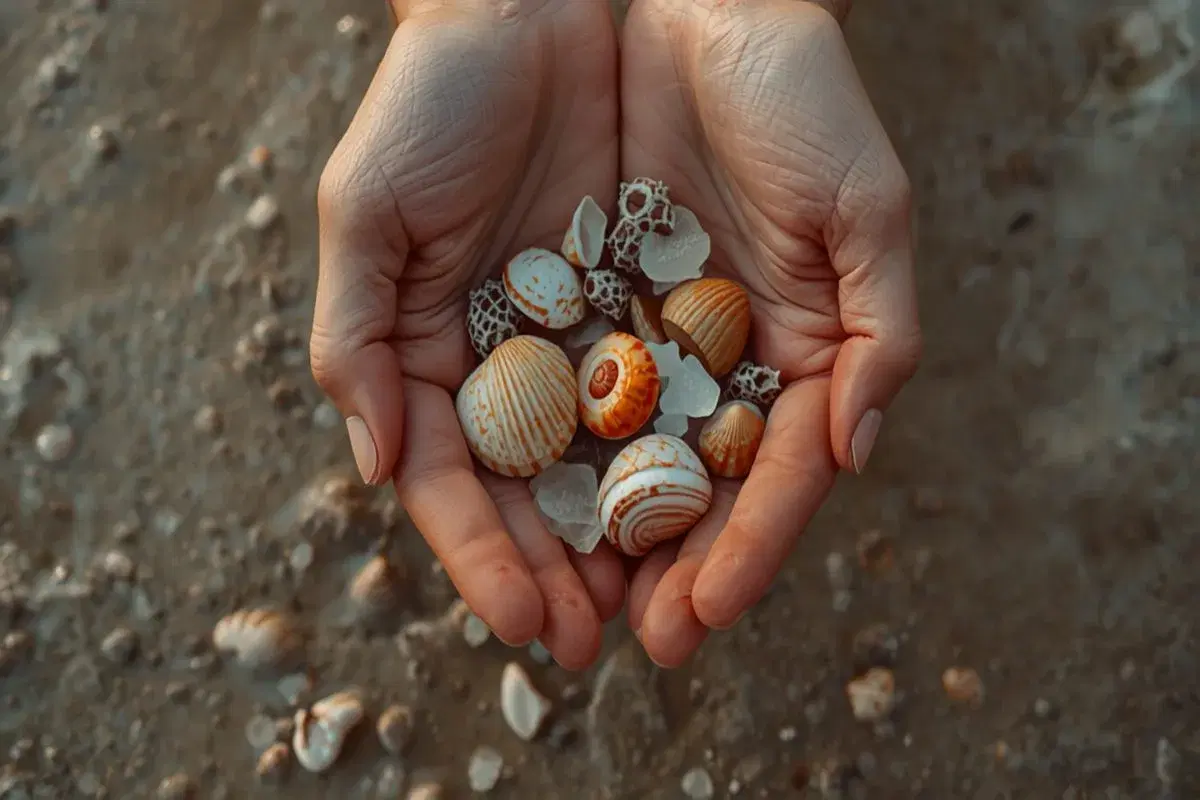
Shelling is the cheapest, easiest, most reliably rewarding thing you can do on the Outer Banks. It costs nothing, it works in any season, and it keeps kids busy for an hour without a screen in sight. The OBX faces straight out into the Atlantic with no barrier reefs offshore, so the surf delivers shells right onto the sand — and the long, undeveloped northern beaches mean fewer hands have picked them over before you arrive.
But the difference between a great shelling morning and an empty bucket comes down to timing. Show up at the wrong tide, on the wrong beach, after the wrong weather, and you'll find a lot of broken clam halves. Show up right, and you'll come home with whelks the size of your fist. Here's how to do it right.
The Single Most Important Rule: Go at Low Tide
If you remember one thing from this guide, make it this. The best shelling happens in the hour or two on either side of low tide, when the receding water exposes the widest stretch of sand and drops a fresh line of shells along the tideline.
Pull up a tide chart for your beach before you go — search "tide chart" plus the nearest town (Corolla, Duck, Kitty Hawk, or Nags Head) and you'll get the day's low-tide time. Aim to be on the sand about an hour before. As the water pulls back, walk the wrack line — that ribbon of seaweed, shell fragments, and debris the last high tide left behind. That's where the good stuff collects.
A falling tide is better than a rising one. On a rising tide the water is covering ground, not exposing it, and you'll spend more time dodging waves than scanning sand.
Time It With the Weather, Too
Tides set the daily rhythm; weather sets the great days apart from the good ones.
- The morning after a storm or a hard blow is prime time. Strong onshore wind and big surf churn the bottom offshore and throw heavier, more intact shells up onto the beach — including the larger whelks that normally stay submerged. A nor'easter is a sheller's best friend.
- Winter beats summer. Counterintuitive, but true. The bigger swells of fall and winter move more shells, and there's almost no one out competing for them. If you're visiting in the off-season, bundle up and go — the beaches are emptiest and the haul is often best.
- Early morning beats midday. Not because shells appear overnight, but because you're ahead of every other beachcomber. By 10 a.m. on a summer Saturday, the easy-reach beaches have been combed. Get there at first light.
What You'll Actually Find on the Northern OBX
The Currituck and northern Dare beaches produce a consistent cast of shells. Here's what to look for:
- Whelk shells — the big spiral shells most people call "conchs." On the OBX you'll mostly find knobbed and channeled whelks, sometimes the prized lightning whelk (its opening is on the left). Whole, unbroken whelks the size of your hand are the trophy find, and storms are when they show up.
- Scotch bonnets — North Carolina's official state shell, a rounded shell with a delicate spiral of orange-brown squares. Finding a whole one is a genuine event; most shellers go years between good ones.
- Olive shells — small, glossy, cylindrical, and beautifully patterned. They turn up often and kids love them.
- Whelk egg cases — papery, coiled strings that look like a stack of translucent discs. Not a shell, but a fascinating find. Hold one up to the light and you can sometimes see tiny baby whelks still inside.
- Augers, cockles, jingle shells, and moon snails — the everyday finds that fill the bottom of the bucket and make great craft material.
- Sea glass — frosted, wave-tumbled glass in white, green, and the occasional rare blue. It's less common here than shells, but the wrack line near older, more developed stretches is where to look.
- Sand dollars and shark teeth — both turn up on the OBX. Small black fossil shark teeth hide in the coarser, shellier patches of sand; scan slowly and you'll start to see them.
Where to Go Shelling Near Grandy Cove
Grandy Cove sits on the Currituck Sound mainland, putting every northern beach within a short drive. A few strong options:
- The Currituck Outer Banks (Corolla and the 4WD beaches north). The farther north you go up the beach, the less foot traffic, and the 4WD-only beaches toward Carova are about as untouched as the East Coast gets. If you're already heading up to see the wild horses, bring a bucket — the same remote beaches that protect the herd also keep the shells from being picked over. See our Corolla guide for access details.
- Kitty Hawk and Kill Devil Hills. The closest ocean beaches to Grandy, roughly 20–25 minutes away. Easy public access with parking, good for a quick low-tide walk before breakfast.
- Nags Head. Wider beaches and the famous fishing pier; the sand near the pier pilings often holds more shell. Pair it with a day exploring the central beaches.
- The sound side, right at the dock. Don't overlook Currituck Sound itself. The sound shoreline holds different treasures than the ocean — oyster and clam shells, smooth driftwood, and quiet wading for little kids who aren't ready for ocean surf. You can do this without leaving the property.
For a full rundown of the ocean beaches and who each one suits, see our guide to the best Outer Banks beaches.
Gear: You Need Almost Nothing
That's the beauty of it. But a few small things make the morning better:
- A mesh or breathable bag, not a sealed bucket. Live shells and wet sand need airflow, and a mesh bag lets the sand sift out as you walk.
- An old kitchen colander or sand scoop — a game-changer for kids, who can sift the wrack line and find the tiny olives and augers they'd otherwise miss.
- Water shoes. The shelliest patches of sand are also the ones with the sharpest broken pieces.
- A small spray bottle of water. Wet shells show their true color and pattern; a dry shell on the sand can hide a beauty.
- Sun protection and a tide chart on your phone. That's it.
The Rules Worth Knowing
A few simple guidelines keep shelling sustainable and legal:
- Take only empty shells. If there's still a living animal inside — a hermit crab, a snail, a clam that's clamped shut — put it back. A whelk that's heavy and sealed is alive; a light, hollow one is fair game.
- Sand dollars must be dead to keep. A living sand dollar is brownish and fuzzy with tiny moving spines on the underside. A keeper is bleached white and hard. If in doubt, leave it.
- Don't take live sand dollars or starfish home to dry out — it's both unkind and, in protected stretches, not allowed.
- Leave the wildlife alone. If you're shelling near the 4WD beaches, give any wild horses a wide berth — staying 50 feet away is the law up there.
- Pack out what you pack in. The reason these beaches still produce great shells is that people take care of them.
Why the Northern OBX Is a Sheller's Home Base
The shelling math is simple: the less developed and less crowded a beach, the better the finds. The northern Currituck beaches check both boxes, and basing your trip on the sound-side mainland in Grandy puts you a few minutes from the quietest ocean stretches while keeping you on the calmer, more affordable side of the barrier islands.
It's also a perfect activity for the way most families actually vacation here — a low-tide shelling walk at dawn, back to the waterfront house for breakfast, and the whole rest of the day still ahead. Bring the dog; the northern beaches are dog-friendly in the off-season, and a slow shelling walk is exactly their speed. (See our pet policy — up to two dogs, no size limits.)
When you're ready to plan a trip built around quiet beaches and early-morning low tides, check availability at Grandy Cove and book direct — no platform fees, just the waterfront and the gateway to every beach north of the bridge.