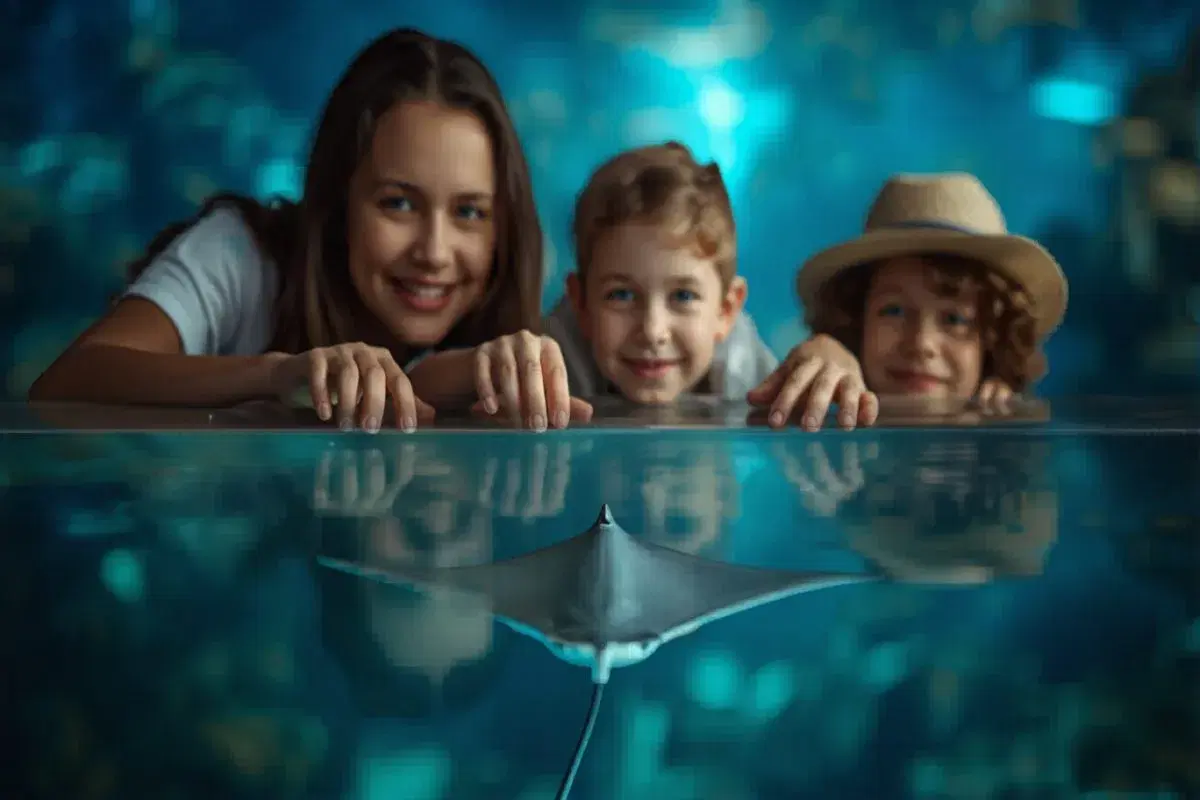
The North Carolina Aquarium on Roanoke Island is one of three state aquariums in North Carolina, and it punches well above its size. Set on the edge of Croatan Sound just outside Manteo, it packs sharks, sea turtles, river otters, alligators, and a hands-on touch tank into a building you can comfortably explore in two to three hours. For families staying on the Outer Banks — especially anyone who hits a rainy beach day — it's one of the most reliable outings on the northern OBX.
Here's everything you need to know to plan a visit, including timing, what to see, and how to fold it into a day trip from Grandy.
Where It Is and How to Get There
The aquarium sits on Airport Road on Roanoke Island, just north of downtown Manteo and right next to the Dare County Regional Airport. From the central Outer Banks beaches it's a short hop across the Washington Baum Bridge from Nags Head.
From Grandy Cove, the aquarium is roughly a 50–55 minute drive south — you'll take the Wright Memorial Bridge onto the barrier islands, run down US-158 through Kitty Hawk and Kill Devil Hills, then cross to Roanoke Island at Whalebone Junction. It's an easy, scenic drive and pairs naturally with a full day exploring Manteo. See our Manteo connections and the wider OBX layout for how the island towns fit together.
Parking at the aquarium is free and ample, including accessible spaces close to the entrance.
Hours, Tickets, and What to Expect on Cost
The aquarium is open daily, generally 9 a.m. to 5 p.m., with limited closures on a few major holidays. Hours can shift seasonally, so it's worth a quick check on the official North Carolina Aquariums website before you go.
Admission is tiered by age, with discounts for children and seniors and free entry for the youngest kids and toddlers. It's a state-run facility, so pricing is reasonable compared to private attractions. If you're visiting more than one of North Carolina's coastal aquariums on a longer trip, ask about a multi-site or annual membership — it can pay for itself quickly for a traveling family.
Tip: Buying tickets online in advance saves time at the door during busy summer mornings and holiday weeks.
What to See Inside
The aquarium is organized as a walk-through journey from North Carolina's freshwater rivers out to the open Atlantic. Highlights include:
The Graveyard of the Atlantic Tank
The centerpiece is a 285,000-gallon ocean tank built around a replica of the USS Monitor, the Civil War ironclad that sank off Cape Hatteras. Sand tiger sharks, large game fish, and rays circle the wreck. Time your visit around a scheduled dive show or feeding, when a diver enters the tank with a microphone and narrates — it's the moment kids talk about afterward.
Sea Turtle Exhibits
The aquarium plays an active role in sea turtle rescue and rehabilitation, and you'll often see recovering turtles on display along with information about local conservation work. It's a genuine, not-staged look at marine science happening on the Outer Banks.
The Touch Tank
A shallow, hands-on tank lets kids gently touch stingrays, horseshoe crabs, whelks, and other shoreline creatures under staff supervision. For young children this is reliably the favorite stop — budget extra time here.
River Otters and Alligators
The freshwater section features playful river otters (catch them at feeding time if you can) and American alligators in a recreated wetland habitat — a reminder that coastal North Carolina is as much swamp and sound as it is surf.
Smaller Galleries
Rotating and permanent exhibits cover jellyfish, seahorses, octopus, eels, and native reptiles. There's also an outdoor area and seasonal programming, so check the day's schedule when you arrive.
How Long to Plan For
Most families spend two to three hours here. Pre-schoolers and dedicated animal lovers can easily stretch it longer, especially if you catch multiple feedings and dive shows. Grab the daily program schedule at the front desk and plan your loop around the talks — they're the difference between a good visit and a great one.
Best Time to Visit
- Rainy or windy beach days — this is the obvious move. When the forecast turns, the aquarium is the OBX's go-to indoor backup, so expect it to be busier on those days.
- First thing in the morning (9 a.m.) — quieter galleries and easier touch-tank access before tour groups arrive.
- Shoulder seasons — spring and fall visits are calmer and more comfortable. See our spring Outer Banks guide and fall on the Outer Banks for what else is happening those times of year.
- Off-season — in winter on the OBX, the aquarium is one of the few attractions reliably open, and it's blissfully uncrowded.
Is It Worth It with Kids?
Yes — comfortably. If you're traveling with children, the aquarium belongs on the shortlist alongside the other family activities on the Outer Banks. It works for a wide age range: toddlers love the touch tank and otters, while older kids and adults get real substance from the Monitor tank and the conservation exhibits. It's stroller-friendly, climate-controlled, and has restrooms and a gift shop on site.
Make It a Manteo Day Trip
The aquarium pairs naturally with a half-day in downtown Manteo, about 10 minutes away. After the aquarium, head into town for the Manteo waterfront boardwalk, the Elizabeth II sailing ship at Roanoke Island Festival Park, lunch at a sound-side restaurant, and — depending on the season — Fort Raleigh National Historic Site and The Lost Colony outdoor drama.
If you want a more structured plan, our 3-day OBX itinerary and 5-day OBX itinerary both fold Roanoke Island into a wider trip. History-minded travelers can pair the day with the Wright Brothers National Memorial on the way down or back, since it sits right on the US-158 route from Grandy.
A Few Practical Tips
- Bring a light layer. The galleries are kept cool and the touch-tank area can feel breezy.
- Hand sanitizer is provided near the touch tank, but it's worth carrying your own.
- Photography is allowed; skip the flash, which stresses the animals and bounces off the glass.
- Eat before or after. On-site food options are limited — Manteo, 10 minutes away, has far better choices. For ideas, see our best seafood restaurants on the OBX.
- No pets. The aquarium is indoors and pets aren't permitted, so this is a day to leave the dog at the rental. Grandy Cove is pet-friendly with no size restrictions, and a sound-side house with a yard is an easy, low-stress place for a dog to wait out a few hours.
Basing Your Trip in Grandy
The North Carolina Aquarium on Roanoke Island is one of those Outer Banks stops that works in any weather and across nearly every age — which makes it a smart anchor for a day when the beach isn't cooperating, or simply when you want a change of pace.
Staying at Grandy Cove puts you on the quiet, waterfront side of the northern OBX, with the aquarium, Manteo, the beaches, and the wild horses of Corolla all within an easy drive. After a day on Roanoke Island you come home to a private dock on Currituck Sound rather than a crowded beach-strip rental.
Check availability for your Outer Banks trip and book your stay direct — no platform fees, no surprises.