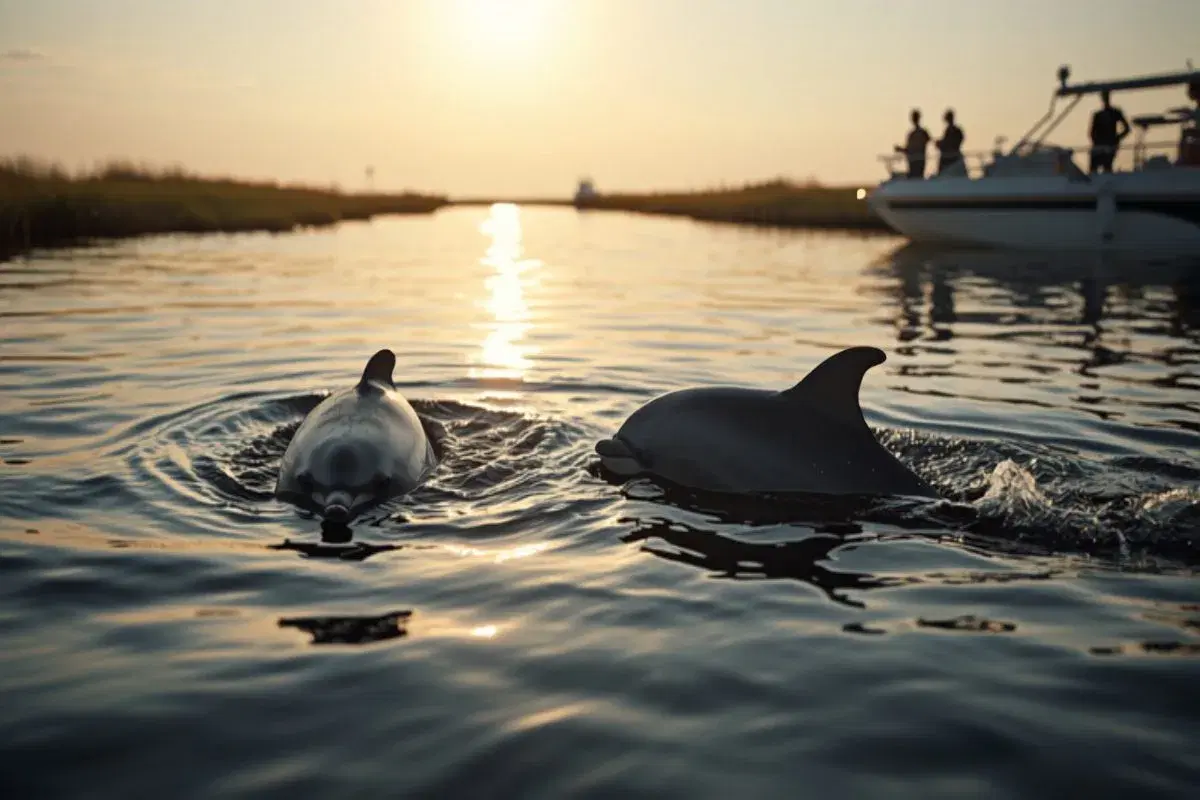
Few things land better with kids — and, honestly, with adults — than a wild dolphin surfacing ten feet from the boat. The Outer Banks is one of the more reliable places on the East Coast to see Atlantic bottlenose dolphins in the warm months, and a dolphin tour is one of the easiest, lowest-effort outings you can add to an OBX trip. You don't need your own boat, you don't need to know anything about the water, and most tours run under two hours.
This guide covers where dolphin tours actually launch, when you're most likely to see dolphins, how the different tour styles compare, and how to work one into a stay based at Grandy Cove on the Currituck Sound mainland.
Where the Dolphins Actually Are
First, an honest bit of geography, because it affects where you'll go. Bottlenose dolphins are saltwater animals. They congregate in the higher-salinity sounds and nearshore ocean of the central and southern Outer Banks — Roanoke Sound, Croatan Sound, the waters around Oregon Inlet, and just off the beach in the Atlantic.
Currituck Sound, where Grandy Cove sits, is a large, shallow, mostly brackish-to-freshwater estuary fed by rivers to the north. That low salinity is exactly why it's such famous duck-hunting and largemouth-bass water — and also why you won't reliably find dolphins in it. So while our own private dock and boat launch is perfect for kayaking, crabbing, and casting a line, dolphin watching means a short drive south and east to where the salt water is.
The good news: from Grandy, the main departure points are all a comfortable 30–50 minute drive. You can do a dolphin tour and be back at the dock by dinner.
Where Dolphin Tours Launch
Tours cluster in a handful of spots along the central OBX. Here's how they break down.
Nags Head / The Causeway
The stretch of US-64/264 causeway between Nags Head and Roanoke Island crosses Roanoke Sound, and several operators run dolphin-watch and sunset cruises from the marinas and docks along here. This is the closest concentration of ocean-side tour boats and puts you right in the middle of prime dolphin water. It's roughly 35–45 minutes from Grandy Cove.
Manteo Waterfront (Roanoke Island)
The downtown Manteo waterfront is a lovely place to launch from — you board right off the boardwalk in the historic harbor, and several tour boats and the Manteo-based cruise operators run dolphin and sunset trips out into Shallowbag Bay and Roanoke Sound. It pairs perfectly with a day exploring town; see our Manteo day-trip guide for what else to do while you're there. About 45–50 minutes from Grandy.
Duck and Duck Town Sound-Side
Up in Duck, sound-side outfitters run smaller, quieter dolphin and nature cruises on the northern sound. These tend to be lower-key and good for families who want a calmer, less-crowded boat. Duck is one of the closer options — about 25–35 minutes from Grandy, and worth combining with a stroll on the Duck boardwalk.
Corolla
A few operators in Corolla run sound-side wildlife and dolphin cruises on the northern Currituck Sound. Dolphin sightings are less consistent this far north (again, the salinity), so read tour descriptions carefully — many Corolla "sound tours" are really about sunset, birds, and the Whalehead/lighthouse backdrop rather than guaranteed dolphins. Still a beautiful outing. It's about 35–40 minutes up NC-12; more in our Corolla guide.
Best Time of Year
Dolphins are seasonal visitors to Outer Banks waters. They follow warming water and baitfish inshore in spring and stay through early fall.
- Peak season: May through September. This is when bottlenose dolphins are most consistently present in the sounds and nearshore, and when nearly all tour operators are running daily trips.
- Shoulder months: April and October. Sightings still happen, especially on warm stretches, but they get less predictable as the water cools.
- Winter (November–March): Most dolphins move offshore or south, and the majority of tour boats stop running dolphin trips for the season. If you're visiting in the off-season, plan around other water activities instead.
If dolphins are the specific reason for your trip, aim for June through August — the sweet spot for both sightings and full tour schedules. That also overlaps with peak family-travel season, so book your stay early.
Best Time of Day
Two windows tend to be best, for different reasons:
- Morning (roughly 8–11 a.m.): Water is typically calmest, dolphins are actively feeding, and the light is soft. Best odds for a smooth ride and good sightings — a real plus if anyone in your group is prone to seasickness.
- Evening / sunset cruises: Dolphins are often active again in the cooler evening hours, and you get the payoff of an OBX sunset over the sound. These are the most popular tours and sell out first in midsummer, so reserve ahead.
Midday tours still run and still see dolphins, but the light is harsher and afternoon summer thunderstorms can pop up. Check the forecast — coastal storms in July and August tend to build in the afternoon.
Types of Dolphin Tours
Not all "dolphin tours" are the same boat. Match the style to your group.
Dedicated dolphin-watch cruises. Usually 1.5–2 hours on a mid-size covered boat, narrated by a naturalist or captain who knows where the dolphins have been feeding. Highest success rate, most kid-friendly, shaded seating. The default choice for families.
Sunset cruises. Similar boats, timed for the golden hour, often with a scenic and wildlife focus rather than a dolphin guarantee. Great for couples and mixed-age groups. Bring a light layer — it cools off on the water.
Small-boat and eco tours. Smaller vessels holding fewer passengers for a more personal trip. More flexibility to linger when dolphins show up, but less shade and a bumpier ride in chop.
Kayak and SUP dolphin tours. Guided paddle trips in the calmer sound waters where you may encounter dolphins at water level. This is a genuinely memorable, low-to-the-water experience for confident paddlers and older kids — but it's a workout, and sightings aren't guaranteed. If your crew is into paddling, pair the idea with our kayaking Currituck Sound guide and OBX water sports overview.
Parasail and combo boats. Some operators fold dolphin-spotting into parasailing or other water-sports trips. Fun, but dolphins are a bonus rather than the focus.
What to Bring
Dolphin tours are low-effort, but a little prep makes the trip better — especially with kids:
- Sunscreen and a hat. Even on a two-hour trip, sun off the water adds up fast. Reef-safe if you can.
- A light layer or windbreaker. It's cooler and breezier on the water than on land, particularly on evening cruises.
- Water and a small snack. Most boats allow them; check when you book.
- Sunglasses with a strap. Glare is real, and gusts steal loose sunglasses.
- A phone or camera you're okay getting a little wet. Consider a floating strap or a zip bag.
- Motion-sickness remedy if anyone is sensitive — take it before boarding, and pick a morning tour on a calmer forecast.
- Cash for tips for the crew if the trip was good.
Leave the drone at home — most operators and the surrounding wildlife areas don't allow them, and they stress the animals.
Dolphin-Watching Etiquette (and the Rules)
Bottlenose dolphins are protected under the Marine Mammal Protection Act. Reputable tour operators know the rules and follow them; if you're ever out on your own boat, so should you:
- Stay at least 50 yards away. Never chase, corner, or try to swim with wild dolphins.
- Never feed them. Feeding wild dolphins is illegal and teaches them to approach boats, which gets them hurt.
- Let them come to you. The best encounters happen when you idle and the dolphins choose to ride your wake or investigate.
A good captain will cut the engine and let a pod approach on its own terms — that's when you get the close, unhurried looks that make the trip.
Making It a Day from Grandy Cove
Because the dolphin water is on the central OBX, a tour pairs naturally with the rest of a day out that direction. A few easy combinations:
- Manteo day: Morning dolphin cruise off the waterfront, lunch in town, then the NC Aquarium on Roanoke Island in the afternoon.
- Nags Head day: Dolphin tour from the causeway, then Jockey's Ridge State Park for the dunes at sunset.
- Beach-and-boat day: Beach morning, then an evening sunset dolphin cruise to cap it off.
Back at Grandy Cove, the private dock on Currituck Sound gives you the calmer, freshwater side of OBX life — crabbing, kayaking, casting for bass, and watching the sun come up over the sound — while keeping every central-OBX attraction, dolphin tours included, within an easy drive.
And because Grandy Cove is pet-friendly with no size restrictions, the dog can come along for the vacation even if it has to sit out the boat.
Plan Your Trip
Dolphin tours are at their best from June through August, so if wild bottlenose dolphins are on your family's OBX wish list, aim for the heart of summer and reserve both your tour and your stay early — the good sunset cruises fill up fast.
Check availability at Grandy Cove and book direct — no platform fees, right on the Currituck Sound, and 30–50 minutes from every dolphin dock on the Outer Banks.