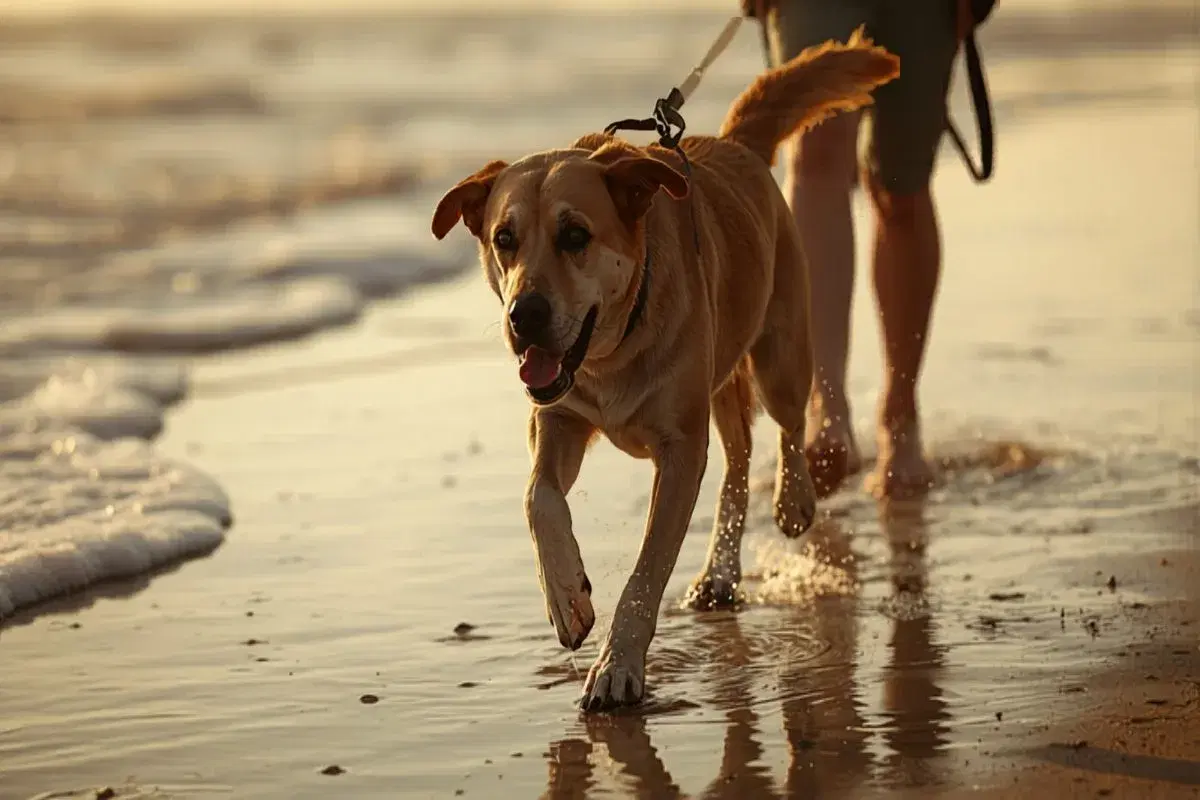
If you've tried to book an Outer Banks vacation with a 90-pound Lab or a 130-pound mastiff, you already know the frustration. A rental listing says "pet-friendly" in the headline, you read the fine print, and there it is buried in the house rules: two dogs maximum, 30 lbs each.
The OBX is a fantastic destination for dogs — wide off-leash beaches in the off-season, miles of sound-side trails, dog-friendly breweries and patios — but the rental market does not match the reality of what people are actually traveling with. This guide is for the owners of the big dogs: the retrievers, shepherds, danes, mastiffs, ridgebacks, pit mixes, and shaggy mutts who don't make it through the average size cutoff.
Here's how to plan a trip that actually works.
Why Most OBX Rentals Limit Dog Size
The size cap is not really about the dog. It's about the rental company's insurance policy and their concern about flooring, furniture, and noise complaints in densely-built oceanfront subdivisions. A 25-lb cap is the easiest way to filter out anything they perceive as risk, and it's set without much regard for the actual behavior of the dog inside the home.
The result: very few "pet-friendly" listings are usable for owners of large breeds. You'll routinely see:
- Two dogs, 25 lbs each maximum — common with the big property management companies
- One dog only, under 40 lbs — common with smaller individually-managed listings
- No restricted breeds — usually a list including Pit Bulls, Rottweilers, Dobermans, Mastiffs, German Shepherds, and Huskies, regardless of the individual dog
- Pet fees scaling by weight — some listings charge $150 per pet, $250 if over 50 lbs
For what the rental fine print usually says, how the OBX hotels compare, and how to find a rental with no pet fee, see our pet-friendly Outer Banks rentals guide.
What to Look For Instead
When you're searching for a rental that genuinely accommodates a large dog, the green flags are specific:
- "No size restrictions" stated in the listing — not just "pet-friendly"
- A flat pet fee, not a per-pound charge — suggests the host actually expects large dogs
- Photos showing tile, hardwood, or LVP flooring — indicates the home is set up for muddy paws
- A fenced yard or direct outdoor access — so you're not leashing up at 2 a.m.
- Sound-side or rural location — fewer noise-sensitive neighbors than oceanfront subdivisions
- Direct booking, not just Vrbo/Airbnb — owners who book direct usually have more flexible pet policies
Grandy Cove is one of the few OBX-area rentals with a hard "no size restrictions" policy and accommodates two dogs of any size. It sits on Currituck Sound with a fenced area, sound access, and direct booking — see the pets page for the full pet policy.
Driving In: The Long Trip Considerations
The Outer Banks is a driving destination for most guests. Whether you're coming from the DC area (~5 hours), Richmond (~4 hours), or further north (8+ hours from New York or New England), you're going to be in the car for a long stretch with a large dog.
A few things that make the drive easier:
- Leave at first light, not mid-morning. Northern Virginia and the DC suburbs can add 90 minutes to a trip if you hit them at the wrong hour.
- Plan a real break every 2.5–3 hours, not a gas-station-rush stop. Look for state parks, rest areas with grass strips, or large hardware-store parking lots where a dog can stretch and sniff.
- Pack a portable water bowl and a gallon jug — gas station drinking fountains are not a thing, and a thirsty large breed will not be happy.
- Avoid the Wright Memorial Bridge backup on summer Saturdays. US-158 over the bridge into the OBX is famously slow on changeover days. If you're staying in Grandy specifically, you don't cross the bridge, which is one of the underrated advantages of basing your trip on the mainland side.
For dogs prone to car anxiety, a Thundershirt and a familiar blanket in the crate or back seat go a long way. If your vet has recommended a calming medication for travel, give it a test run before the trip.
Beach Access for Large Dogs
This is where the OBX shines if you time it right.
Off-season (Sept 16 – May 14): Most OBX towns allow dogs on the beach off-leash with voice control. This is the closest thing to a true large-dog playground on the East Coast. Wide, hard-packed sand, cool water, and miles of running room. Towns with year-round leash-required rules include Duck and Southern Shores; Kitty Hawk, Kill Devil Hills, Nags Head, and Corolla all permit off-leash with voice control off-season.
In-season (May 15 – Sept 15): Leash laws apply on most beaches, and some towns restrict dogs to specific hours (typically before 9 a.m. and after 6 p.m.). Plan beach trips accordingly — early morning is genuinely cooler and far less crowded.
The 4WD beaches in Carova (north of Corolla, in the wild horse area) are dog-friendly off-leash year-round, and they remain one of the best large-dog experiences on the East Coast. You need a 4WD vehicle or a tour to reach them. See our Corolla wild horse tours guide.
A note on heat: dark-coated dogs (Labs, retrievers, shepherds) overheat quickly on summer sand. Sand temperatures can hit 120°F by noon. Stick to dawn and dusk beach trips, bring shade, and check paw pads.
Sound-Side and Trail Options
The ocean is not the only large-dog opportunity on the OBX. The sound-side and the woods around Grandy and Currituck County offer different experiences that are often better suited to big dogs:
- Currituck Sound shoreline — calm, shallow, swimmable water perfect for dogs who find Atlantic surf overwhelming. Many large breeds actually prefer the sound for the gentler entry and warmer summer temperatures.
- Currituck Heritage Park in Corolla — leashed dogs welcome on the lawns and the boardwalk by the Whalehead Club
- Nags Head Woods Preserve — nature trails through maritime forest; leashed dogs allowed on most trails. Cooler than the beach in summer.
- Jockey's Ridge State Park — dogs allowed on leash. Massive sand dunes for sniffing and running off-leash energy with a long line.
For a deeper look at trails, see our hiking with dogs on the OBX guide.
Restaurants, Breweries, and Public Spaces
Plenty of OBX establishments welcome dogs on outdoor patios, but big dogs need a little more planning. Some patios are tight, table-clustered spaces where a 90-lb dog wedged under a four-top is genuinely uncomfortable for everyone.
Better-suited patios for large dogs:
- Outer Banks Brewing Station (Kill Devil Hills) — large patio with space between tables
- Mike Dianna's Grill Room (Corolla) — dog-friendly outdoor area with room to stretch
- Lucky 12 Tavern (Nags Head) — sidewalk seating with breathing room
- Stack 'em High breakfast spots — outdoor patios in Kill Devil Hills and Nags Head
- Coastal Cravings (Duck) — fenced outdoor area
We have a fuller list in the dog-friendly restaurants OBX guide.
A practical tip: bring a portable mat or small blanket. A dog with a "place" cue and a familiar mat is far easier in a busy restaurant patio than one trying to sort out the rules from scratch.
Packing for a Large Dog Specifically
Most generic pet-trip lists are written for small dogs. Big dogs have different needs. The essentials we'd add:
- Heavy-duty 30-foot long line — for beach recall practice and trail use
- Cooling mat or elevated cot — large breeds overheat faster on heated tile or carpet
- Two collapsible water bowls — one for the car, one for outings
- A stack of old beach towels — large dogs come back from the beach carrying a lot of sand
- A specifically-sized crate or x-pen if your dog is crate-trained — many rentals do not provide one
- Brush + de-shedder — Atlantic salt water and beach sand mat thick coats fast
- Vet records and microchip info — required by some rentals, useful if your dog ever slips a leash on an unfamiliar beach
- Your dog's regular food in sealed containers — switching food on a trip is a recipe for a bad first night
For the full checklist, see the dog packing list for OBX trips.
Vet and Emergency Resources
Before any trip with a large dog, know where the nearest emergency vet is. The OBX has a small handful of full-service practices, and after-hours options are limited.
The closest 24-hour emergency vet to most of the OBX is in Chesapeake or Virginia Beach, about 60–90 minutes north. For day-time issues, there are good clinics in Currituck, Kitty Hawk, and Manteo. We've broken down the full list in the vet guide for the Outer Banks.
A few large-dog-specific things to flag with your vet before the trip:
- Bloat (GDV) risk — deep-chested breeds (Danes, shepherds, weimaraners) are at higher risk after long car rides and big meals. Feed smaller meals and rest after travel.
- Saltwater ingestion — large dogs drink a lot, and a Lab playing fetch in the surf will swallow more salt water than you'd think. Provide fresh water frequently and watch for vomiting.
- Hot spots and ear infections — long-coated and floppy-eared breeds are prone to these after swimming. Towel dry thoroughly and clean ears.
House Rules That Make a Trip Easier
If you're staying somewhere that genuinely welcomes large dogs (vs. tolerating them), reciprocate. The reason hosts shut down their pet policies is rarely a single bad guest — it's the slow accumulation of small things.
A short list of house behaviors that keep large-dog policies generous:
- Towel paws at the door before letting the dog in from the beach
- Use the crate or a designated room when dogs are home alone
- Don't let dogs on white couches or beds unless the listing explicitly invites it
- Pick up yard waste promptly
- Bring your own dog beds — don't expect the home's bedding to absorb the wear
This is also why direct-booked owner-managed rentals like Grandy Cove tend to have better pet policies than corporate-managed listings: the owners see who actually cares for the property and can extend trust accordingly.
Why Grandy as a Base for a Large-Dog Trip
A few honest reasons Grandy works specifically for big dogs:
- No size restrictions, no breed restrictions — actually written into the pet policy, not just "pet-friendly" in the listing headline
- Direct sound access — your dog can wade into Currituck Sound from a calm shoreline, no crowded beach access points
- Less foot traffic than the beach towns — easier neighbors, no patio-density issues
- 15–30 minutes from every OBX beach — close enough for daily off-season runs, far enough that you're not in summer beach traffic
- Quiet for nervous travelers — the sound side is genuinely quieter than oceanfront subdivisions, which helps anxious dogs settle in
Plan Your Trip
Traveling with a large dog takes a little more planning, but the OBX rewards the effort. Off-season especially, this is one of the best dog destinations on the East Coast — wide, empty beaches, mild weather, and plenty of room to move.
Check availability at Grandy Cove — two dogs, any size, any breed, and a private sound-side base for the trip. Book direct for the most flexible pet policy on the OBX.