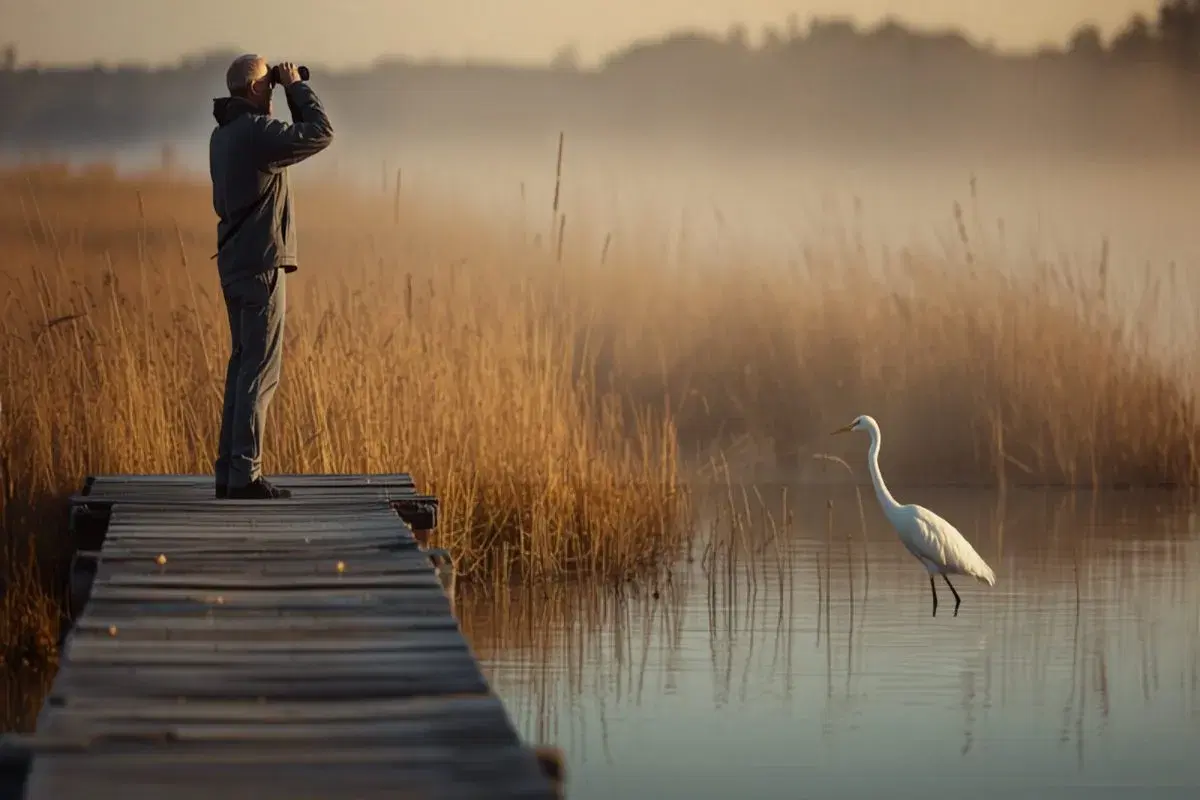
Most people come to the Outer Banks for the ocean. Birders come for the sound. The shallow, brackish water of Currituck Sound — and the marshes, maritime forests, and refuges that ring it — sit squarely on the Atlantic Flyway, the migratory highway that funnels millions of birds up and down the East Coast each spring and fall. That position makes the northern OBX one of the most rewarding birding regions in North Carolina, and it's the same geography that made Currituck a legendary waterfowl destination a century ago.
You don't need to be a serious lister to enjoy it. A pair of binoculars, an early start, and a quiet spot at the water's edge will hand you herons, egrets, ospreys, and — depending on the season — tens of thousands of ducks, geese, and swans. This guide covers where to go, what to expect by season, and how to build a birding trip around a quiet base on the sound.
Why Currituck Sound Is a Birding Hotspot
Currituck Sound is unusual. It's a large, shallow, low-salinity estuary protected from the open ocean by the barrier islands, which means it grows the kind of submerged vegetation and marsh habitat that waterfowl depend on. Three things stack up here:
- Flyway position — The sound is a natural rest-and-refuel stop for migrating birds moving along the coast.
- Habitat variety — Open water, freshwater and brackish marsh, maritime forest, and managed refuge impoundments all sit within a few miles of each other, so you can move between very different bird communities in a single morning.
- Winter waterfowl concentrations — Currituck has historically wintered enormous numbers of ducks, geese, tundra swans, and snow geese. The same abundance that drew market hunters and gentlemen's hunt clubs in the 1800s is what birders chase today.
If you've read our guide to duck hunting on Currituck Sound, you already know the waterfowl story — birding is the catch-and-release version of the same heritage.
Where to Bird on the Northern Outer Banks
You can find birds almost anywhere along the sound, but a handful of locations are worth planning your day around.
Mackay Island National Wildlife Refuge (Knotts Island)
Tucked into the northern end of Currituck County on Knotts Island, Mackay Island NWR is the marquee birding destination in the area. It was established to protect wintering waterfowl, and it delivers: thousands of ducks, geese, and tundra swans use its managed impoundments in the cold months. The refuge has a wildlife drive and walking trails that put you right alongside the marsh, and the dikes are excellent vantage points for scanning open water.
Knotts Island sits across the sound from the mainland, and getting there is part of the experience — it's reached either by a drive up through Virginia or by the free state ferry from Currituck mainland. Check current refuge hours and seasonal road and trail closures before you go, since portions are closed during certain times to protect wildlife.
Pine Island Audubon Sanctuary (Corolla)
On the barrier island side, the Pine Island Audubon Sanctuary in Corolla protects a long stretch of maritime forest and sound-side marsh. A boardwalk and trail let you walk out into habitat that's otherwise hard to reach, and the mix of woods and water edge is good for songbirds, wading birds, and raptors. It's an easy, family-friendly stop if you're already heading up to Corolla for the wild horse tours.
Currituck Banks Reserve (Corolla)
At the north end of the paved road in Corolla, the Currituck Banks Reserve — part of the North Carolina Coastal Reserve — offers a boardwalk through maritime forest out to the sound, plus a longer primitive trail. It's quiet, free, and a good place to combine a short walk with sound-side bird watching.
The Currituck Sound Shoreline and Your Own Dock
You don't have to drive anywhere to start. The marsh edges and open water along the sound hold birds year-round, and one of the underrated pleasures of a sound-side stay is birding from a chair on the dock with coffee in hand. Herons and egrets work the shallows, ospreys hunt overhead in the warm months, and kingfishers rattle along the shoreline. Grandy Cove's private dock on Currituck Sound makes this the easiest birding of the whole trip — early morning, before the wind picks up, is the best window.
Beach, Inlet, and Pier Birding
Don't forget the ocean side. The beaches and any open inlets are good for shorebirds, gulls, terns, pelicans, and the occasional migrating raptor moving down the dune line in fall. Pier areas and the wrack line at dawn can be surprisingly productive for shorebirds probing the sand.
What You'll See, Season by Season
Birding here changes dramatically with the calendar. Plan your trip around what you most want to see.
Fall (September–November)
Fall migration is one of the best times to visit. Shorebirds move through late summer into fall, raptors stream down the coast, and the first waves of waterfowl begin arriving toward late fall. Cooler, calmer mornings make for comfortable, productive sessions. If you're planning a shoulder-season trip, pair this guide with our fall on the Outer Banks overview.
Winter (December–February)
Winter is the showstopper for waterfowl. This is when Currituck Sound earns its reputation — large concentrations of ducks, Canada and snow geese, and tundra swans settle into the sound and the refuge impoundments. Mackay Island NWR is the place to be. Dress warmly, bring a spotting scope if you have one, and use the dikes and wildlife drive to scan. Our winter on the Outer Banks guide covers what else is open in the quiet season.
Spring (March–May)
Spring migration brings songbirds back through the maritime forests, wading birds into the marshes, and ospreys back to their nesting platforms. The maritime forest trails at Currituck Banks and Pine Island are at their best now. Spring is also when the marsh greens up and the whole sound comes back to life. See our spring Outer Banks guide for timing.
Summer (June–August)
Summer birding is quieter for variety but still rewarding for breeding wading birds, ospreys actively hunting and feeding young, terns and pelicans working the surf, and herons and egrets in the marshes. Bird early — by mid-morning the heat and wind shut things down. Summer is also peak family-vacation season, so birding makes a great quiet activity before the beach day begins.
What to Bring
You can keep it simple, but a few things make a real difference:
- Binoculars — 8x42 is the classic all-around choice. Bring a pair for everyone if you can.
- A spotting scope — Genuinely useful for scanning open water and distant waterfowl on the sound. Not essential, but a difference-maker in winter.
- A field guide or app — A regional guide or a phone app with bird sounds helps with identification.
- Layers and waterproof footwear — Marsh edges are wet, and mornings on the water are cooler than you expect, even in summer.
- Bug protection — Marshes mean insects, especially in the warm months. Cover up and bring repellent.
- Sun protection and water — There's little shade on the dikes and open marsh.
A Sample Birding Day from Grandy
Here's how a birding-focused day can flow when you're based on the sound:
- Dawn on the dock — Start with coffee and the shoreline birds right at your base before the wind comes up.
- Mid-morning at a refuge or sanctuary — Drive to Mackay Island NWR (winter) or out to Pine Island and Currituck Banks in Corolla (spring through fall) for the wildlife drive and trails.
- Midday break — Rest during the slow, hot, windy part of the day. Grab lunch — our best seafood restaurants on the OBX guide has options.
- Late afternoon on the water — If you have a kayak, the calm evening sound is a wonderful way to drift up on wading birds. See our kayaking Currituck Sound guide for put-ins and tips.
- Sunset back at the dock — End where you started, watching herons head to roost.
Birding with Dogs and Kids
A quiet, leashed dog can come along on plenty of sound-side walks and dock sessions — just keep your distance from nesting and feeding birds, and check each refuge's pet rules, since some protected areas restrict dogs. Grandy Cove is pet-friendly with no size restrictions, which makes it easy to bring the family dog on a birding trip. For kids, birding pairs naturally with the maritime forest boardwalks, the ferry ride to Knotts Island, and a visit to the NC Aquarium on Roanoke Island on a windy day.
Birding Etiquette on the Sound
The reason Currituck still holds so many birds is that the habitat is protected and people respect it. A few simple rules keep it that way:
- Keep your distance. Use optics to get close, not your feet. Flushing birds wastes their energy, especially in winter.
- Respect closures. Refuge areas close seasonally for a reason — to give birds undisturbed rest and nesting habitat.
- Stay on trails and dikes. Marsh vegetation is fragile and easy to trample.
- Leave no trace. Pack out everything, and never feed wildlife.
Plan Your Currituck Sound Birding Trip
The northern Outer Banks reward birders who base themselves close to the water and start early. Staying on Currituck Sound puts you within a short drive of Mackay Island, the Corolla sanctuaries, and the ocean beaches — and gives you a private dock to bird from before you've even left the house. Grandy Cove sits right on the sound in Grandy, the quiet northern gateway to the OBX, with space for the family, the dog, and your gear.
Check availability and book direct to plan your birding trip on Currituck Sound.