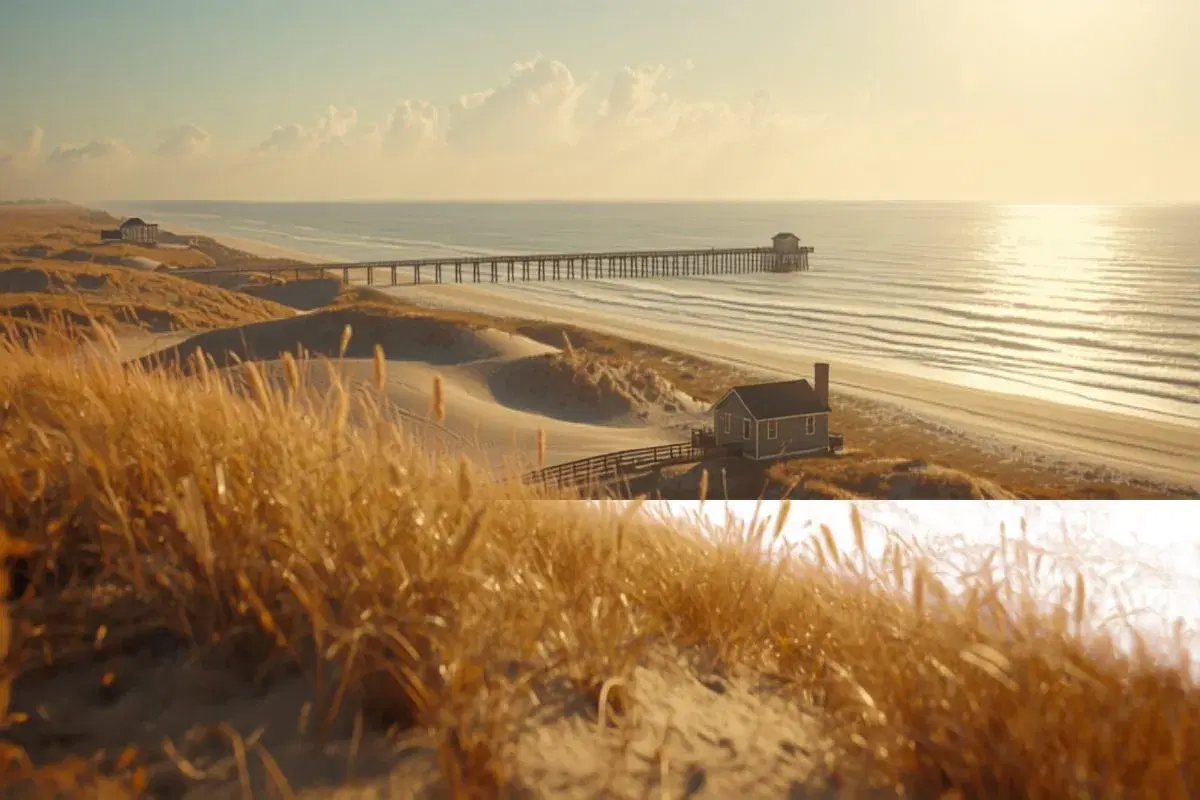
If there's one town that says Outer Banks in a single image, it's Nags Head — the great rolling dunes of Jockey's Ridge, the silhouette of a fishing pier reaching into the Atlantic, and the weathered cedar-shake cottages of the old beach road. It's the most central of the OBX beach towns, the one with the widest range of things to do, and the one most first-time visitors picture when they imagine the trip.
This guide covers where Nags Head is, what's actually worth your time there, and how to fit it into a trip based at Grandy Cove on the Currituck Sound mainland.
Where Nags Head Is — and How to Get There from Grandy
Nags Head sits at the southern end of the developed Outer Banks beach towns, just below Kill Devil Hills and just north of where US-64 peels off toward Manteo and Roanoke Island. It's bracketed by two main roads: US-158 (the "bypass," the fast inland route) and NC-12 (the "Beach Road," the slower, more scenic strip that hugs the oceanfront cottages).
From Grandy Cove, the drive is roughly 35–45 minutes — east across the Wright Memorial Bridge, then south through Kitty Hawk and Kill Devil Hills on US-158. It's the farthest of the central beach towns from Grandy, but it's still an easy out-and-back for a day, and it's the natural anchor for a longer southern-OBX day that also takes in Manteo.
The one thing to plan around is summer traffic. US-158 through Kill Devil Hills and Nags Head is the busiest stretch of road on the OBX, and it clogs badly on Saturday turnover days and on hot afternoons when everyone leaves the beach at once. Travel mid-morning or after the dinner hour and you'll avoid the worst of it.
Jockey's Ridge State Park
The single best reason to come to Nags Head is Jockey's Ridge — the tallest active sand dune system on the East Coast, rising 80 to 100 feet depending on how the wind has shaped it that season. It's a genuinely strange and beautiful place: a desert-like expanse of shifting sand in the middle of a beach town, with the Atlantic on one side and Roanoke Sound on the other.
What to do there:
- Climb the dunes. It's free, open year-round, and the walk to the top rewards you with a 360-degree view that takes in both the ocean and the sound. Go barefoot in the cooler months; in midsummer the sand gets hot enough to burn — wear shoes or go early.
- Fly a kite. The steady wind that built the dunes makes this one of the best kite-flying spots anywhere. Shops in town sell them if you didn't bring one.
- Hang gliding. Jockey's Ridge is one of the most famous places in the country to learn to hang glide — the soft sand makes for forgiving landings, and a long-running local school runs beginner lessons right off the dune.
- Sunset. The west-facing dunes over Roanoke Sound deliver one of the most reliable sunset views on the OBX. Arrive 30–45 minutes before and bring a blanket.
We've written a full, standalone walkthrough — trail tips, parking, the best times to climb, and the sandboarding rules — in our Jockey's Ridge State Park guide. It's worth a read before you go.
The Nags Head Fishing Pier and Jennette's Pier
Nags Head has two oceanfront piers, and they serve different purposes.
Jennette's Pier is the showpiece — a modern, 1,000-foot concrete pier rebuilt by the NC Aquarium system, with a proper education center, clean restrooms, wind turbines, and an easy walk out over the surf even if you're not fishing. There's a small admission to walk the pier and a separate fishing fee, with rod rentals available. It's stroller-friendly and one of the better spots on the OBX to watch anglers work without committing to a full day of fishing yourself.
Nags Head Fishing Pier, farther up the Beach Road, is the classic wooden pier with a restaurant at its base — more old-OBX in character, a good place to grab breakfast with an ocean view and watch the morning fishing.
If fishing is the point of your trip, start with our Outer Banks fishing guide, which covers pier, surf, sound, and charter options across the region.
Nags Head Beaches
The beaches in Nags Head are wide, sandy, and well-supplied — the most family-ready public beaches in the central OBX. There are dozens of public access points along the Beach Road, many with parking, bathhouses, and seasonal lifeguards. Because the town is built around tourism, you're never far from a place to rent an umbrella, grab lunch, or refill the cooler.
A few specifics worth knowing:
- Coquina Beach, just south of town toward Bodie Island, is one of the prettiest and least crowded access points — a National Park Service beach with a big free lot, bathhouse, and the Bodie Island Lighthouse a short drive away.
- Beach driving is permitted in designated areas with a permit in the off-season; rules tighten in summer.
- The surf here is stronger than the northern beaches in Corolla and Duck — good for boogie boarding and surfing, but keep an eye on younger swimmers and watch the flag warnings.
For how Nags Head's beaches compare to the quieter stretches up north, see our best beaches on the Outer Banks post, and if you're traveling with a dog, our dog beaches of the Outer Banks guide covers the leash rules town by town.
Bodie Island Lighthouse
Just south of Nags Head, where the development thins out into the Cape Hatteras National Seashore, stands the Bodie Island Lighthouse — the black-and-white horizontally striped tower first lit in 1872. You can climb it in season (it's a tighter, steeper climb than Currituck), and the surrounding marsh boardwalk and visitor center are worth a stop even when the tower's closed.
It pairs naturally with a beach day at Coquina Beach next door, and it's one of the classic OBX lighthouses covered in our best OBX lighthouses guide.
Eating in Nags Head
Nags Head has the deepest restaurant scene on the northern half of the OBX — everything from greasy-in-a-good-way breakfast spots to serious sound-front seafood. A few categories to look for:
- Sound-side seafood with sunset views over Roanoke Sound — the town's signature dining experience.
- Classic OBX breakfast joints for biscuits, pancakes, and coffee before a beach or dune day.
- Casual surf-and-shrimp shacks along the Beach Road for steamed-shrimp baskets and fish sandwiches.
- Fresh local catch — if you'd rather cook at the rental, stop at one of the area markets on the way back. Our OBX seafood markets guide maps out where to buy fresh local fish, shrimp, and crab.
For a fuller rundown across the whole region, see our best seafood restaurants on the OBX.
A Suggested Day Trip from Grandy
Here's a comfortable Nags Head day from a Grandy base:
| Time | Stop |
|---|---|
| 8:30 a.m. | Leave Grandy; drive over Wright Memorial Bridge and south on US-158 |
| 9:30 a.m. | Breakfast at a Beach Road spot or the Nags Head Pier restaurant |
| 10:30 a.m. | Climb Jockey's Ridge before the sand gets hot |
| 12:30 p.m. | Lunch — sound-side seafood or a casual shrimp basket |
| 2:00 p.m. | Beach time at Coquina Beach + a quick stop at Bodie Island Lighthouse |
| 4:30 p.m. | Walk out on Jennette's Pier |
| 6:00 p.m. | Sunset back at Jockey's Ridge, then drive home to Grandy for dinner |
You can compress or expand this easily — a family with young kids might swap the lighthouse climb for more beach time, while a couple might add a sound-side dinner and skip the early start. For longer trips, both our 3-day OBX itinerary and 5-day OBX itinerary build Nags Head in as a full anchor day.
Nags Head with Dogs
Nags Head is reasonably dog-friendly, but with summer rules to know. Leashed dogs are allowed on the beaches year-round, with time-of-day restrictions in the peak summer months (typically no dogs on the beach during midday hours from roughly mid-May through mid-September — check the current Town of Nags Head ordinance before you go). Jockey's Ridge allows leashed dogs on the dunes, which makes it one of the more genuinely dog-welcoming attractions in town — just watch the hot sand and bring water.
What's not dog-friendly: climbing the Bodie Island Lighthouse, most restaurant interiors (though many Beach Road spots have dog-friendly patios), and the inside of Jennette's Pier's education building. On a day with several of those stops, your dog is happier back at the rental — Grandy Cove is pet-friendly with no size restrictions on up to two dogs, with a yard right on the sound, which beats a hot vehicle or a kennel during a midday lighthouse-and-aquarium run.
For the full picture on visiting the OBX with dogs, see our pet-friendly Outer Banks guide.
Best Time to Visit Nags Head
- Late spring (May–early June) and early fall (September–October) are the sweet spots — warm water, mild dune-climbing weather, lighter traffic, and easier parking. Our spring on the OBX and fall on the OBX guides go deeper.
- Summer (mid-June through August) is peak — the beaches and restaurants are busiest, US-158 traffic is heaviest, and the summer dog rules are in effect. Come early in the day for Jockey's Ridge and the beach.
- Winter (December–February) is quiet and dramatic — many restaurants run reduced hours, but Jockey's Ridge, the beaches, and the lighthouses stay open, and you'll have the dunes nearly to yourself. See our winter on the OBX guide.
Why Grandy Is a Smart Base for Visiting Nags Head
You can rent in Nags Head itself — it has the densest concentration of vacation rentals on the OBX, oceanfront and otherwise. But there are real reasons to base across the bridge in Grandy instead and treat Nags Head as a day trip:
- You skip the worst traffic. Staying on the mainland side means you're not parked in the US-158 crawl every time you leave the house.
- Currituck Sound out the back door. At Grandy Cove you can fish, crab, or paddle directly from the private dock and boat launch — no driving, no crowds. Our crabbing on Currituck Sound and kayaking Currituck Sound guides show you how to use it.
- Central position. Nags Head is 35–45 minutes south; Corolla is 35–40 minutes north; Manteo is a short hop past Nags Head. One base reaches all of it — see our location page for the full map.
- A real yard for dogs. Most Nags Head rentals don't have fenced yards. Grandy Cove does.
You get the classic Nags Head day — the dune, the pier, the wide beach — and then come home to a quieter waterfront property on the sound, on the affordable side of the bridge.
Check availability for your Outer Banks trip and book direct with no platform fees.